
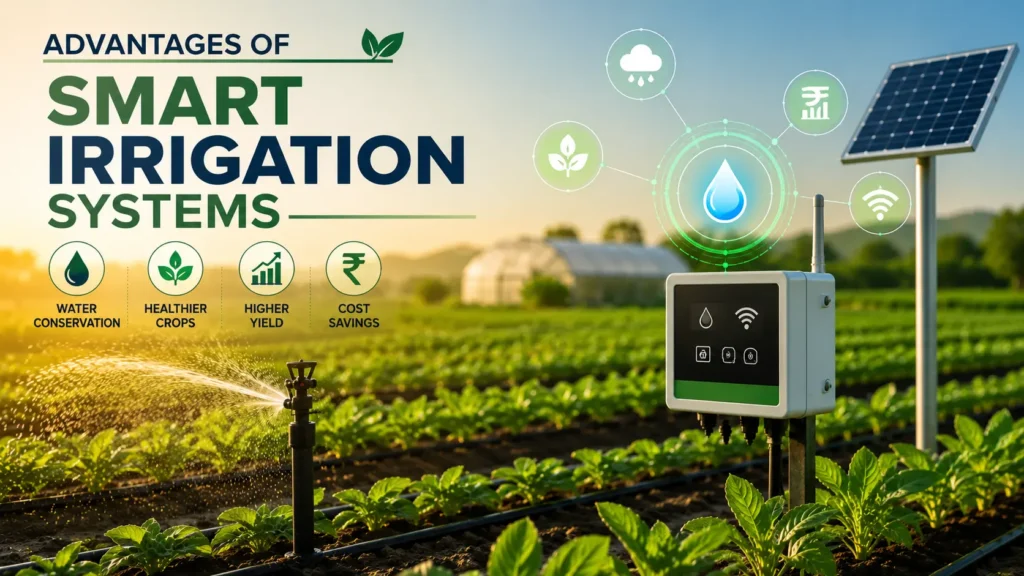
Water is one of the most important resources in agriculture. However, due to the conventional irrigation practices, it is being wasted through overwatering, poor distribution, and incorrect timing. Advantages of Smart irrigation systems are basically making changes to conventional irrigation by minimizing water wastage, increasing productivity and saving money.
The use of modern technology in irrigation includes the use of sensors, which measure the amount of soil moisture, the use of weather data, and automated controls that enable the watering to take place according to the field situation, rather than a scheduled irrigation process.
In this manual, you will learn about the advantages of smart irrigation systems, how they operate, their applications and why more people are using them.
What Is a Smart Irrigation System?
A smart irrigation system is a system that controls irrigation using parameters such as:
- The moisture content in the soil
- The weather forecast
- Rain
- Temperature
- Requirements of crops
- Evaporation
Differently from conventional irrigation, smart systems only irrigate when there is a need.
How Does a Smart Irrigation System Work?
Components of a smart irrigation system are:
- Soil moisture sensors
- Weather sensors
- Smart irrigation controller
- Valves
- Drip/sprinkler irrigation system
- Mobile app/online monitoring
The sensors gather data from the field and feed them to the controller. The controller then makes a decision on whether irrigation is required.
For instance, if there will be rain tomorrow, then the irrigation system may decide to skip irrigation and save water.
Advantages of Smart Irrigation Systems
Here are the top benefits of using smart irrigation system in agriculture, landscaping and gardening.
1. Water Conservation
Water saving is the primary advantage.
Conventional irrigation is associated with significant water waste due to runoff, evaporation, and excessive watering.
Smart irrigation system:
- Irrigates only when needed
- Stops irrigating after rainfall
- Prevents overwatering
- Cuts down water waste
Many farmers will be able to save a lot of water after installing smart irrigation.
2. Saving Money
Saving water saves money.
Farmers, who spend on ground water extraction and municipal water, should see lower operational costs as their pumps will work less often.
3. Plant Health Improvement
Plants will flourish with proper irrigation.
Overwatering leads to:
- Diseases
- Losing of nutrients
- Poor oxygen supply
Underwatering causes:
- Wilting
- Slow growth
- Poor yields
Using smart irrigation system makes it easier to keep the optimal soil moisture level.
4. Higher Yields
Healthy plants will provide you with better crop.
Consistent soil moisture provided by smart irrigation system minimizes stress in plants at key growth stages.
This allows:
- Higher quality of fruits
- Bigger vegetables
- Better grains production
- More uniform crops
5. Saves Labor
Irrigation done manually involves people having to do the following:
- Opening valves
- Observing the crops
- Turning the pumps on and off
- Irrigation scheduling
Through automation, smart irrigation helps save labor.
6. Saves Energy
Pumps are powered using either electricity or fuel such as diesel.
With irrigation happening when necessary:
- Pump operating time will be minimalized
- The electricity bills will be reduced
- Diesel usage will decrease
It also assists in reducing the energy used on the farm.
7. Prevention of Overwatering
Overwatering is the most common farming mistake.
Some of the results include:
- Waterlogging
- Root rots
- Fungi infections
- Soil erosion
Smart irrigation helps avoid these problems through proper irrigation of crops.
8. Reduction of Weed Growth
Excessive irrigation promotes weed growth.
Since smart irrigation is efficient with regard to irrigation, weeds get little water.
9. Efficient Utilization of Fertilizer
Overwatering might lead to the fertilizer being washed away from the root zone.
Smart irrigation prevents this problem.
10. Facilitates Sustainable Agriculture
Water conservation is becoming increasingly necessary due to climate change and increased water demand.
Smart irrigation promotes sustainable agriculture through:
- Water conservation
- Energy conservation
- Reduction in carbon emissions
- Resource optimization
11. Remote Monitoring
Most smart systems enable farmers to monitor irrigation through their smartphone.
Typically, remote monitoring systems include:
- Real-time updates
- Control of pumps
- Water usage reports
- Irrigation scheduling
- Alerts
This proves very useful to farmers who manage more than one field.
12. Weather-based Irrigation
Modern smart irrigation systems connect with weather data.
The irrigation system will not irrigate the land if rain is expected.
Alternatively, in case of hot and dry weather, irrigation will be intensified.
13. Improved Soil Structure
Maintenance of optimum moisture level in the soil ensures that its structure remains healthy.
Some of the benefits include:
- Erosion prevention
- Increase in microbial activities
- Enhanced root development
- Prevention of soil compaction due to excess water
Healthy soils ensure sustainable agriculture.
14. Compatible with Different Crops
Smart irrigation systems are compatible with various crops such as:
- Vegetables
- Fruits
- Wheat
- Rice
- Cotton
- Sugarcane
- Orchards
- Greenhouses
- Vineyards
Additionally, it can be modified to serve lawns, parks, golf courses, and home gardens.
15. Irrigation Record Keeping is Improved
Some systems automatically keep records such as:
- Water consumption
- Irrigation timings
- Soil moisture level
- Operation of the pump
- Weather
These records allow farmers to take better decisions over time.
Application of Smart Irrigation Systems

Smart irrigation is applied in various industries.
Agriculture
The use of smart irrigation enhances water efficiency and production.
Greenhouse
A controlled environment will benefit from automatic irrigation schedules.
Home Garden
It will be easier to maintain healthy gardens while using minimal water.
Commercial Landscape
Hotel, school, office, and parks benefit from smart irrigation in order to save on maintenance expenses.
Golf Course
Big landscapes will benefit from precise irrigation through different areas.
Components of a Smart Irrigation System
Smart irrigation system consists of:
- Smart controller
- Soil moisture sensors
- Weather station
- Rain sensors
- Flow sensors
- Valves
- Water pump
- Drip/sprinkler irrigation
- Mobile app
- Internet connection
Challenges Facing Smart Irrigation Systems
However, despite their numerous benefits, there are some challenges facing such smart irrigation systems.
High Installation Cost
The installation of sensors, controllers, and automated devices requires initial funding.
Internet Connection
Most sophisticated smart irrigation systems work best with internet connectivity.
Maintenance
The sensors and controllers require periodic maintenance.
Technical Know-How
There is a need for basic technical training to harness the full potential of smart irrigation technology.
Tips on Maximizing Benefits from Smart Irrigation Systems
For one to gain maximum benefit from smart irrigation system:
- Install quality soil moisture sensors.
- Maintain irrigation equipment.
- Apply proper irrigation methods.
- Periodically review weather schedule settings.
- Monitor system performance via the mobile application.
- Quickly repair any leaks.
- Clean filters and emitters.
The Future of Smart Irrigation
Technologies such as artificial intelligence, satellite imagery, drones, and the Internet of Things (IoT) have made smart irrigation more efficient.
Future smart irrigation systems will be able to:
- Accurately predict water needs of crops.
- Detect leaks.
- Monitor plants’ health using cameras.
- Provide irrigation schedules using AI.
- Integrate smart irrigation into farm management software.
Conclusion: Advantages of Smart Irrigation Systems
The benefits of smart irrigation systems extend much further than just water savings alone. It enables farmers to cut down on costs, promote plant wellness, increase yield, conserve energy, and utilize resources more efficiently. In the face of the growing problems related to climate change and water scarcity, implementing smart irrigation practices may become an effective solution for agricultural production.
From the management of your small vegetable patch to large-scale commercial farms, installing a smart irrigation system will help boost efficiency and save one of the most important resources in agriculture – water.
(FAQs) : Advantages of Smart Irrigation Systems
What are the advantages of smart irrigation systems?
Smart irrigation systems use water efficiently, minimize expenses, ensure healthy crops, maximize production, cut down on labor, are energy efficient, and contribute to sustainable agriculture by irrigating only when necessary.
Is smart irrigation ideal for small farms?
Certainly. There are many cheap options of smart irrigation systems that can be installed at small farms, orchards, kitchen gardens, or even lawns at people’s houses.
Is smart irrigation possible without an Internet connection?
While basic smart irrigation systems can function without internet, the latter is required in order to monitor remotely, store information in clouds, and automate based on weather changes.
Which type of irrigation works well with smart irrigation?
Drip irrigation is thought to be the most suitable type for smart irrigation since it delivers water right to the root of the plant.
Can smart irrigation save on electricity bills?
Indeed, as pumps work only when necessary, it will cut down electricity or diesel costs.