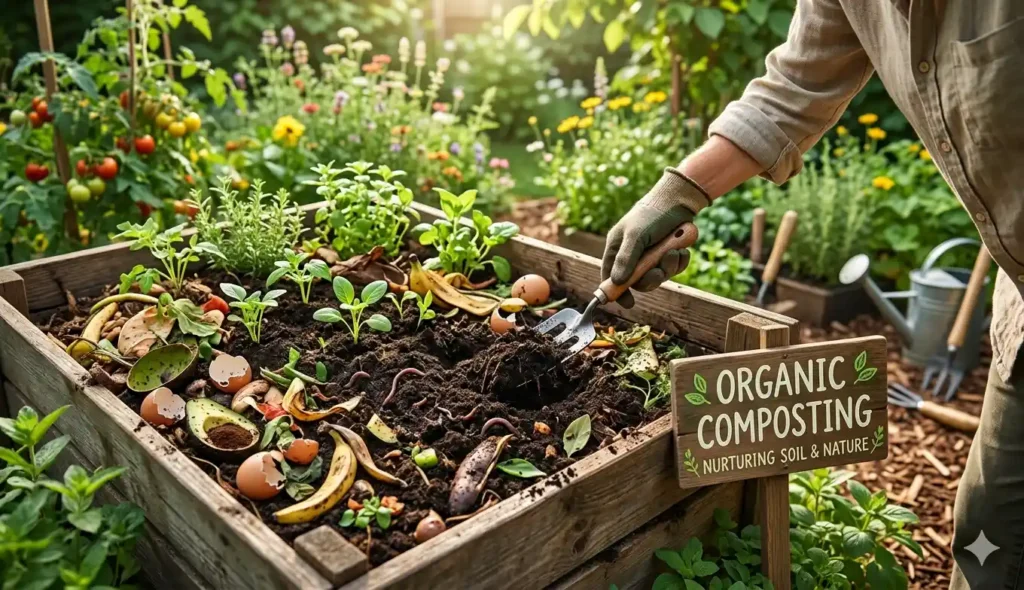
Healthy soil is an essential component of any successful organic agriculture practice, and among the best techniques of improving the soil naturally is the utilization of compost in organic farming practices. Compost is produced by the decomposition process of various organic materials such as vegetable leftovers, residues from crop production, dried leaves, grass, animal droppings, and many others. Instead of using chemical-based fertilizers, organic farmers utilize compost for soil nourishment and health purposes.
The importance of compost goes far beyond providing food for plants. Compost is able to improve the structure of the soil, to help in water retention, to support healthy microorganisms in the soil, to reduce the amount of waste material, and to provide sustainable farming methods. No matter if you have a small kitchen garden or a huge organic farm, you will be able to benefit from using compost in your production.
Here is a brief description of the seven main advantages of compost in organic farming practices.
What is Compost?
Compost is a dark, crumbly, earthy-smelling substance formed by the natural decomposition of organic waste. Organic waste gets broken down into a stable substance with high nutritional value through microorganisms like bacteria, fungi, and earthworms.
Some common components of compost include:
- Peels of vegetables and fruits
- Dry leaves
- Grass clipping
- Residues from crop
- Manure from animals
- Coffee grounds
- Eggshells
- Garden waste
After full decomposition, compost serves as a very good natural fertilizer.
1. Enrichment of Soil with Nutrients Naturally
One of the most significant benefits of compost in organic farming is that it naturally enriches the soil with nutrients.
As opposed to chemical fertilizers that offer nutrients quickly but temporarily, compost offers nutrients slowly. This makes sure that the plants get enough nutrition without loss of any nutrient.
The following nutrients get provided by compost:
- Nitrogen
- Phosphorus
- Potassium
- Calcium
- Magnesium
- Sulfur
- Micro-nutrients
As nutrients get offered slowly, crops get sufficient nutrients throughout their growth period.
2. Better Soil Structure
The structure of the soil influences how easy it will be for roots to grow and for air and water to move.
Compost will enhance the quality of both sandy and clay soils.
For sandy soil
Compost will:
- Enhance water retention
- Retain nutrients for long
- Prevent nutrient leaching
- For clay soil
Compost will:
- Break down compacted soil
- Improve drainage
- Increase airflow
- Facilitate growth of roots
The effect is healthier plants with better capacity to absorb water and nutrients.
3. Improved Water Retention Capacity
Water conservation becomes increasingly important because of climate changes and their influence on rainfall patterns.
One great advantage of using compost in organic farming is its capacity to retain water.
Organic matter will act as a sponge holding water in the soil which gets slowly released to the roots.
Advantages include:
- Frequent irrigation will not be necessary
- Drought resistant
- Lower water bills
- Crop survival during drought
Compost will be highly beneficial for farmers from water deficient areas.
4. Promotes Useful Soil Microorganisms
Soil is alive with millions of microorganisms.
Bacteria, fungi, earthworms, insects and other microorganisms cooperate in making fertile soil.
Compost is the source of their food and habitat.
These beneficial microorganisms provide a lot of services such as:
- Decomposition of organic substances
- Release of nutrients
- Improvement of soil fertility
- Protection of plants from pathogenic microorganisms
- Stimulation of growth and development of plants
Creation of living soil ecosystem is one of the main objectives of organic farming, which is provided by compost.
5. Minimizes Reliance on Synthetic Fertilizers
One of the major distinctions of organic farming is absence of synthetic fertilizers, pesticides and other chemicals.
Instead of using these chemicals, farmers use compost as a natural fertilizer.
Using compost allows to:
- Decrease expenses on fertilizers
- Increase soil fertility
- Prevent pollution by chemicals
- Provide better products
While synthetic fertilizers may destroy soil fertility, compost makes it better each year.
6. Helps Avoid Soil Erosion
Soil must stay in place when healthy.
Weak soil structure causes soil erosion due to either rainfall or winds.
Compost makes soils stable through enriching soils with organic material and creating better roots.
Some advantages are:
- Enhanced soil stability
- Decreased runoff
- Increased water infiltration
- Preventing topsoil loss
Topsoil is crucial to preserve as it contains most nutrients needed for plant growth.
With the use of compost, sustainable farmland can be preserved for generations without harm to the environment.
7. Contributes to Sustainable and Environmentally-Friendly Farming
Most important aspect of compost application in organic farming is its environmental advantage.
Compost makes possible to convert agricultural wastes into resources instead of dumping in landfills.
The following materials can be composted:
- Food scraps
- Agricultural wastes
- Plant remains
- Manure
- Leaves
Recycling allows saving resources while replenishing the soil with valuable nutrients.
Other environmental advantages of using compost include:
- Low greenhouse gases emission
- Reduction of landfills
- Improvement of carbon sequestration in the soil
- Biodiversity enhancement
- Healthy ecosystem
Best Practices for Compost in Organic Farming
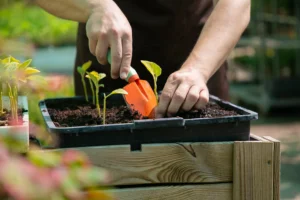
For maximum utilization of compost, you should adhere to the following tips:
Only use mature compost
Compost should have a rich black color, crumbly nature, and a soil-like scent. Unmatured compost will be harmful to plants.
Use before planting
Compost should be applied in the soil a couple of weeks prior to planting.
Use compost evenly
Application should be done evenly in the entire farming area.
Use compost as mulch
A small quantity of compost will keep soil moist and minimize weed growth.
Make compost consistently
Regular making of compost will help you have constant supply of organic matter throughout the year.
Common Misuse of Compost
Compost is very useful but misused may limit its usefulness.
The following are common mistakes when using compost:
- Using immature compost
- Inclusion of diseased vegetation in compost
- Using too much compost
- Failing to take care of moisture content in the compost
- Using contaminated waste material in making compost.
Why is it important to Compost the Soils?
Contrary to fertilizers, which mostly contain nutrients for plant nutrition, the compost feeds the soil itself.
The fertile soil should include organic matter, microorganisms, air, water, and nutrients, which all combine to nurture plant life.
After many planting cycles, the application of compost on a regular basis leads to:
- Higher level of soil organic matter
- Higher level of soil fertility
- Improved crops resilience
- Higher soil biodiversity
- Reduced farming costs
- Increased productivity of the farm
This way, compost becomes one of the most valuable means in the practice of organic agriculture.
Conclusion
The role of compost in organic farming is much wider than its ability to provide the soil with nutrients. It makes soils fertile, improves soil structure, helps to conserve water, benefits the population of soil microorganisms, decreases the usage of chemical fertilizers, prevents soil erosion, and helps in implementing environmentally sound agricultural practices.
For the experienced organic farmer or for those who want to grow vegetables in their gardens, using compost becomes one of the most valuable investments for the better health of soil and harvest. With the help of creating compost from organic wastes, farmers can increase the productivity and preserve natural resources for the future generations.