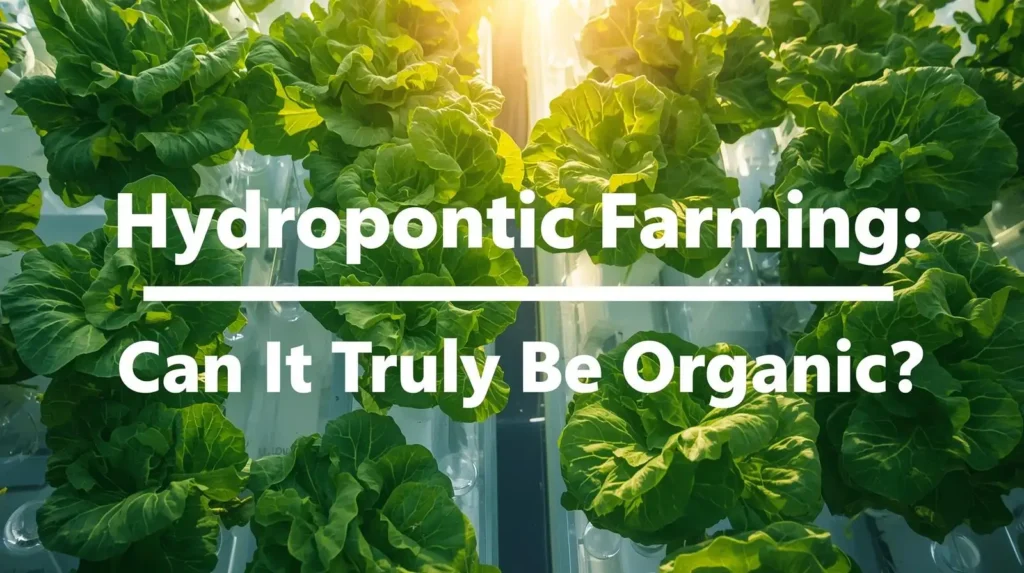

Hydroponics has brought about a change in the methods used by people to cultivate crops. Unlike the traditional farming methods where the crops are planted in the soil, hydroponics involves growing plants using water that contains nutrients that help in feeding the root system.
However, does hydroponics have any value at all? Just like any other farming method, hydroponics has both pros and cons. By learning about the pros and cons of hydroponics, you will be able to determine whether hydroponics is the ideal farming technique for you.
In this article, we shall discuss the advantages and disadvantages of hydroponic farming, costs, and suitability for beginners.
What Is Hydroponic Farming?

Hydroponics is a form of plant growing technique without the use of soil. Plants are not provided with their nutrient needs by the soil but rather through the water and added mineral compounds.
This is how the roots of plants are supported:
- Coconut coir
- Rockwool
- Clay pebbles
- Perlite
- Vermiculite
As nutrients are directly provided to the roots, plants tend to grow faster than the ones grown through the regular way.
How Does Hydroponic Farming Work?
A hydroponics system usually contains:
- Water reservoir
- Nutrient solution
- Growing medium
- Plant containers
- Water pump
- Air pump (optional)
- LED grow lights (if the plants are grown indoors)
Nutrient solution is circulating all the time providing everything necessary for plants’ growth. Now Let’s quickly go ahead and check out the advantages and disadvantages of hydroponic farming:
Advanatges of Hydroponic Farming
1. Rapid Plant Growth
The first major benefit of hydroponic agriculture is that plants develop quickly.
Because of the constant availability of nutrients, there is no necessity for plants to search for nutrition and focus on growing.
Plants usually grow at 20% to 50% faster rate than plants in soil conditions.
2. Uses Much Less Water
Water efficiency in hydroponic agriculture is very high.
Unlike conventional agricultural practices, hydroponics recycles water again and again.
It requires up to 90% less amount of water than conventional agriculture.
3. High Crop Yield
The plants can be planted close to each other without having to compete for nutrients as the roots do not have to look for them.
This allows farmers to grow more crops in the same space.
Increased plant density allows for:
- Increased yields
- Increased productivity
- Increased profitability
4. Does Not Require Fertile Soil
Hydroponics makes it unnecessary to use fertile farmlands.
They can be cultivated:
- In-doors
- On rooftops
- In warehouses
- In greenhouses
- In urban spaces
5. Less Weed Growth
Weed growth becomes practically impossible because of the absence of soil.
Less:
- Manual work
- Application of herbicides
- Maintaining
6. Lesser Pest Infestation
Many pests along with their pathogens are absent in hydroponic systems.
While there can be certain pests such as aphids or whiteflies that appear, generally speaking, the number of pests is smaller.
7. Clean Cultivation
Since hydroponics involves growing plants without using soil, the plants will contain less dirt.
It means cleaning will take much less effort.
8. Precise Nutrient Management
Since farmers control the nutrients received by plants, they know what exactly goes into cultivation.
In case of nutrient deficiency, immediate action can be taken to solve this problem.
9. Year Round Production
With the help of indoor farms, people can get vegetable crops all year round.
Therefore, weather becomes a minor factor in production.
10. Perfect System for Urban Farming
Hydroponics allows urban residents who do not have farmland to cultivate fresh vegetables.
Balconies, rooftops, and rooms are great places for cultivation.
Disadvantages of Hydroponics Farming
Although there are numerous advantages to hydroponic farming, there are some disadvantages to it.
1. High Cost of Installation
The first major problem with hydroponics is the initial cost involved.
Equipment includes:
- Pumps
- Water tanks
- Pipes
- Lighting
- Timers
- Monitors
- Nutrients
The commercial system costs considerably more than conventional farming.
2. Technical Expertise Required
Hydroponics is not a ‘set and forget’ method of farming.
The farmer has to regularly check:
- Water quality
- Concentration of nutrients
- pH balance
- Temperature
- Oxygen content
Novice farmers usually take time to master the process.
3. Need for Electricity
Many hydroponics systems use electricity.
In the event of power cut:
- Pumps stop working.
- Oxygen becomes low.
- The roots get affected.
- Stress is induced in the plants.
Power backup is suggested for large hydroponics systems.
4. Equipment Breakdowns Are Potentially Dangerous
Equipment failure such as a broken pump or a blocked pipeline can easily influence the whole crop.
Unlike soil-grown plants that have some buffering capabilities, hydroponic plants rely entirely on the right function of the equipment.
5. Quick Spreading of Diseases
While there will be fewer diseases in the soil, waterborne disease can easily spread fast in case one plant gets affected.
This is because all plants are usually grown in the same nutrient solution.
6. Frequent Monitoring Is Important
Monitoring of hydroponic farming is an ongoing process.
There is a need to monitor:
- Water level
- Nutrients level
- Root status
- Pump performance
Failure to do so even for a few days might result in the loss of the entire crop.
7. Lack of Crops Diversity
Hydroponic agriculture is mostly used for growing:
- Lettuces
- Spinach
- Herbs
- Tomatoes
- Cucumbers
- Strawberries
- Peppers
Large crops like wheat, rice, and maize cannot be grown using hydroponic agriculture.
8. High Nutrients Cost
Special nutrients needed in hydroponics are costly compared to fertilizers.
Can Hydroponics Be Profitable?

Absolutely, hydroponics can be profitable under certain conditions.
Profitability depends on:
- Choice of crops
- Demand on the local market
- Prices on the market
- Energy costs
- Efficiency of the system
- Farm management
Crops that are high-priced such as lettuce, herbs, strawberries, tomatoes, and leafy greens generate more profit than staples crops.
Who Should Go For Hydroponics?
Hydroponics suits:
- Urban gardeners
- Home gardeners
- Greenhouse farms
- Commercial vegetable producers
- Restaurants producing fresh herbs
- Educational institutions
Hydroponics might be unsuitable for farmers producing cereal crops.
Advice for Hydroponic Beginners
Here are some tips for hydroponics beginners:
- Use a simple type of hydroponic system such as Deep Water Culture (DWC) or Kratky.
- Produce easy-to-grow plants including lettuce, basil, spinach, or mint.
- Control pH level and nutrients content regularly.
- Maintain the water clean and aerated.
- Gradually learn before making an investment in a big hydroponic setup.
- Plan ahead in case of emergency power supply.
Conclusion: Advantages and Disadvantages of Hydroponic Farming
To fully appreciate the advantages and disadvantages of hydroponic farming, it is necessary to first understand what they are. There are many amazing benefits that hydroponics provides such as quick growing, water efficiency, increased production, and ease of growing crops everywhere. However, there are also some downsides to it such as high cost, maintenance, and reliance on equipment.
Hydroponic farming can be an efficient means for people to produce fresh produce all year round if they are ready to learn how to do it properly. It can be done both by home gardeners, urban farmers, and commercial farmers.
(FAQs) : Advantages and Disadvantages of Hydroponic Farming
What are the major advantages of hydroponic agriculture?
Some of the major benefits of hydroponic agriculture include accelerated growth, water conservation, increased yield, space efficiency, reduced weed growth, and year-round crop growth.
What are the major drawbacks of hydroponic agriculture?
High initial cost, reliance on electricity, maintenance, and technical know-how are some of the major drawbacks of hydroponic agriculture.
Is hydroponic farming better than conventional soil farming?
It cannot be said that hydroponic agriculture is better than soil farming as there is no superior method. Hydroponics allows for faster growth and efficient resource utilization, whereas soil farming is cheaper to set up.
Which crops grow well using hydroponics?
Leafy greens, vegetables like tomatoes, cucumbers, and peppers, and even strawberries grow well using hydroponics.
Can a beginner undertake hydroponic farming?
Yes. Beginners usually begin with smaller-scale hydroponic setups at home with easily grown vegetables.