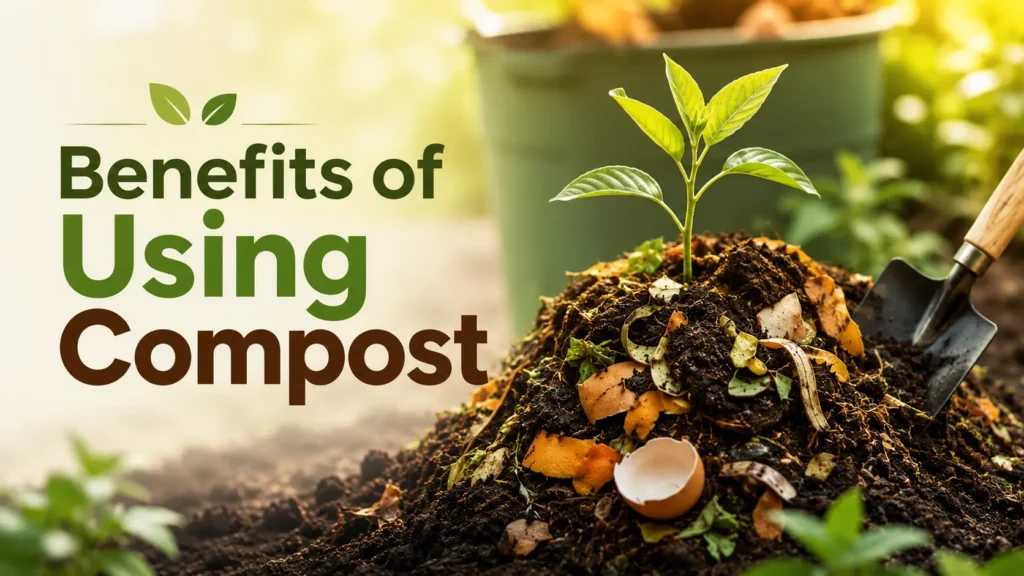
Compost has earned its title as “black gold” due to its amazing capacity to enhance the state of soil and plant development without any artificial means. Be it an amateur in gardening, organic farmer, or industrial producer; composting is bound to yield you an array of benefits which will not be gained with the help of artificial fertilizers alone.
The problems of soil deterioration, its reduced fertility, and environmental pollution only urge farmers and gardeners to adopt composting as the way to recover from these issues and to reduce the volume of waste at the same time.
In this detailed guide, we will talk about the benefits of using compost, its effect on the quality of soil, crop cultivation, environmental protection, and what makes composting the best investment for agriculture and gardening.
What is Compost?
Compost is an organic product made through the breakdown of biodegradable waste material. It is produced using material mentioned below:
- Vegetables and fruit peels
- Dry leaves
- Grass clippings
- Manure
- Residues of crops
- Coffee grounds
- Egg shells
- Wood chips
- Garden waste
Organic microorganisms, fungi, earthworms, water, oxygen, and time combine to produce compost, a dark, crumbly organic material.
As opposed to chemical fertilizers which only give nutrients to plants, compost improves the whole soil ecosystem.
Why Composting Is Important
Soil is the basis for agricultural production. The soil in many regions has been depleted because of years of excess use of chemical fertilizers, soil erosion, and poor farming practices.
Composting contributes to the replenishment of soil by:
- Adding organic matter to the soil
- Improving soil life
- Nutrient recycling
- Decreasing dependency on chemical fertilizers
- Increasing productivity of soil
This makes composting one of the best farm inputs today.
Benefits of Using Compost
1. Improved Soil Structure
Improved soil structure is one of the most significant advantages of compost use.
Optimum soil structure consists of the following:
- Sand
- Silt
- Clay
- Organic material
- Air spaces
- Water
By binding soil particles together into aggregates, compost improves soil structure.
The benefits of improved soil structure include are as follows:
- Enhanced root growth
- Easy tillage
- Less soil compaction
- Enhanced soil aeration
- Improved drainage
Both sandy and clay soils greatly benefit from compost use.
2. Increases Soil Fertility Naturally
Plants get all of the necessary nutrients from compost, such as:
Macroelements
- Nitrogen (N)
- Phosphorus (P)
- Potassium (K)
Secondary elements
- Calcium
- Magnesium
- Sulfur
Microelements
- Zinc
- Iron
- Copper
- Boron
- Manganese
- Molybdenum
As opposed to synthetic fertilizers, compost releases nutrients slowly, minimizing nutrient loss.
3. Improved Water Retention
Inability to retain water is an issue for agriculture around the world.
Just as a sponge, compost absorbs and retains moisture.
It results in:
- Fewer irrigation sessions
- Better drought tolerance
- No water stress
- Improved plant growth during dry periods
Sandy soils greatly benefit from compost since they drain water rapidly.
4. Improves Activity of Soil Microbes
A good soil has billions of beneficial microbes.
Some of them are mentioned below:
- Bacteria
- Fungi
- Earthworms
- Actinomycetes
- Protozoa
They do the following:
- Decompose organic material
- Free nutrients
- Increase fertility of soil
- Provide protection against plant diseases
- Maintain healthy soil ecosystems
Compost provides them with food and habitat.
5. Minimizes the Use of Artificial Fertilizers
Artificial fertilizers supply nutrients immediately, but they do not necessarily enhance soil health.
Continuous use of fertilizers results in:
- Degradation of soil
- Decrease of the amount of microbes
- Imbalance of nutrients
- Pollution of water bodies
- Rising production expenses
Use of compost allows reducing the use of fertilizers without negative effects on crops.
6. Facilitates Organic Farming
Organic farming requires using only natural ways rather than artificial substances.
One of the key factors in organic farming is compost, which:
- Increases fertility of soil
- Encourages biodiversity
- Increases nutrient cycling
- Improves quality of crops
- Complies with requirements of organic farming
7. Promotes Good Root Formation
Well-formed roots are efficient at absorbing water and nutrients.
Compost promotes good root formation by:
- Promoting soil aeration
- Preventing soil compaction
- Ensuring good drainage
- Keeping a constant level of moisture
Plants with healthy roots are generally healthy and productive.
8. Helps in Plant Growth
Plants growing in composted soils are characterized by the following:
- Faster rooting
- Good foliage growth
- Bright green leaves
- Strong stems
- Flowering
- Production of fruits
This happens because compost increases nutrient availability in soils.
9. Prevents Soil Erosion
Erosion causes loss of topsoil and nutrients from soils.
Compost prevents erosion through:
- Good soil aggregate formation
- High rate of water infiltration into soils
- Prevention of runoff
- Strengthening soil structure
Thus, farms can withstand rainy seasons and winds.
10. Boosts Crop Yield
Most farmers report increased yield following repeated use of compost.
Some of the advantages include:
- Uniformity of growth of plants
- Nutrient availability to crops
- Less stress on plants
- Soil fertility over time
The magnitude of increase in yields depends on many factors.
11. Helps Prevent Plant Disease
Good soil inherently has properties to suppress many harmful organisms.
The compost provides beneficial microorganisms to compete with pathogens.
The biological interaction may help prevent issues like:
- Root rot
- Fungal diseases present in the soil
- Some bacterial diseases
Even though the compost cannot substitute integrated pest management, it is one of the factors that create healthy conditions for plants.
12. Enhances Soil Aeration
Plants need oxygen for their roots to grow.
Compacted soil lacks air flow.
Compost leads to:
- Greater pore spaces
- Enhanced movement of oxygen
- Enhanced microbial activity
- Improved root system development
Adequate aeration fosters healthy growth of plants.
13. Buffers Soil pH
Very high acidity or alkalinity prevents proper absorption of nutrients by the soil.
The compost has buffering properties that allow moderating soil pH gradually.
14. Minimizes Waste Generation
Every year millions of tons of organic waste are disposed of in landfills.
The process of composting turns waste into fertilizers.
The materials that can be composted include:
- Kichen leftovers
- Crop leftovers
- Garden waste
- Manure of animals
- Fallen leaves
15. Decreases Greenhouse Gas Emissions
The decomposition of organic matter in landfills occurs in the absence of oxygen and methane is released which is a greenhouse gas.
The composting process leads to reduction in landfill waste thus helping to decrease methane emission.
16. It is Economical
Producing your own compost can lead to savings from:
- Chemical fertilizers
- Soil conditioners
- Waste disposal
- Irrigation (due to increased water retention capacity)
17. Increases Fruits and Vegetables Quality
Most farmers claim improvement in:
- Fruit size
- Color
- Taste
- Shelf life
- Texture
Better quality fruits and vegetables can result from healthy soil but it varies from case to case.
18. Promotes Earthworms Activity
Earthworms are natural soil engineers that:
- Optimize soil structure
- Improve aeration
- Increase soil drainage
- Decompose organic matter
- Nutrient release
Compost creates an environment suitable for earthworm activity.
19. Promotes Biodiversity
Good-quality compost contains:
- Bacteria
- Insects
- Earthworms
- Beneficial fungi
Biodiversity plays an important role in creating resilient soil ecosystems and sustainable farming.
20. Improves Soil Over Time
Contrary to fast-releasing fertilizers, compost improves soil on a yearly basis.
It is beneficial for increasing the following parameters in the soil:
- Organic matter content
- Biological activity
- Nutrient availability
- Resilience
The above mentioned long-term benefits of composting make this process worthwhile.
Benefits of Using Compost Application to Various Soils
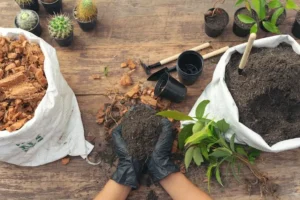
Sandy Soils
Using compost promotes:
- Water retention
- Nutrient retention
- Organic matter content increase
- Reduction of nutrient leaching
Clay Soils
Using compost promotes:
- Drainage
- Reduction of compaction
- Aeration
- Easier cultivation
Loamy Soils
Even loamy soils benefit from using compost due to the increased:
- Microbial activity
- Nutrient cycling
- Organic matter content
- Soil health
- Benefits of Composting in Home Gardens
Benefits of Using Compost in Home Gardens
The benefits of using compost in home gardens include its application in:
- Vegetable garden
- Flower beds
- Fruit trees
- Lawns
- Raised beds
- Indoor plants (when incorporated correctly into potting soils)
The consistent use of compost will result in healthy plants and productive gardens.
Benefits of Using Compost in Agriculture
Some of the uses of compost by farmers include:
- Soil rehabilitation
- Improvement of soil fertility
- Reducing fertilizer expenses
- Water conservation
- Improving plant tolerance
- Regenerative agriculture
Compost is widely used in organic farming, natural farming, and sustainable farming practices.
How to Use Compost
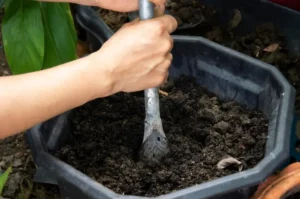
To reap the benefits of compost, one needs to:
- Use fully decomposed compost and not the raw material.
- Spread the layer of compost on the soil surface and incorporate lightly if necessary.
- Use the compost as a mulch to the growing plants.
- Incorporate the compost into potting soils for potted plants.
The amount of compost to apply depends on soil conditions and crop types.
Mistakes to Avoid
Here are some mistakes that you should avoid when composting:
- Using immature compost that can damage your plants.
- Introducing unhealthy plant material without proper composting.
- Using too much at once.
- Neglecting the moisture content and air during composting.
- Using non-compostable materials like plastics and metals.
Avoiding mistakes when managing your compost is very important.
Conclusion
The advantages of the use of compost go beyond providing nutrients for crops alone. Composting helps in improving soil structure, increasing fertility levels, saving water, supporting the development of microorganisms, eliminating waste products, and improving the health of agriculture systems. From small home gardens to agricultural farms, using compost will enhance plant growth and soil health.
Composting is an essential aspect of both gardening and agriculture practices, and the use of composting is vital to the future of sustainable agriculture.
(FAQs) : Benefits of Using Compost
What are the advantages of composting?
The key benefits of composting include soil fertility improvement, better water retention, promotion of helpful microorganisms, reduced waste production, enhanced plant growth, and sustained soil quality.
Can compost completely replace chemical fertilizers?
Composting could decrease usage of chemical fertilizers, although its complete replacement is based on crop needs, soil quality, and farming objectives. Testing soil determines optimal nutrient strategy.
How often should you add compost to your soil?
Home gardeners apply compost either once or twice annually, and farmers apply it before planting or prior to soil preparation. The optimal application rate depends on crops used and soil condition.
Is compost suitable for all types of plants?
In general, vegetables, fruits, flowers, trees, and ornamental plants gain from compost. However, certain plants, depending on their soil needs, could require other growing mediums.
Will composting make soil better with time?
Yes. Constant compost applications improve soil condition, increasing organic materials, microbial activity, and soil fertility.