
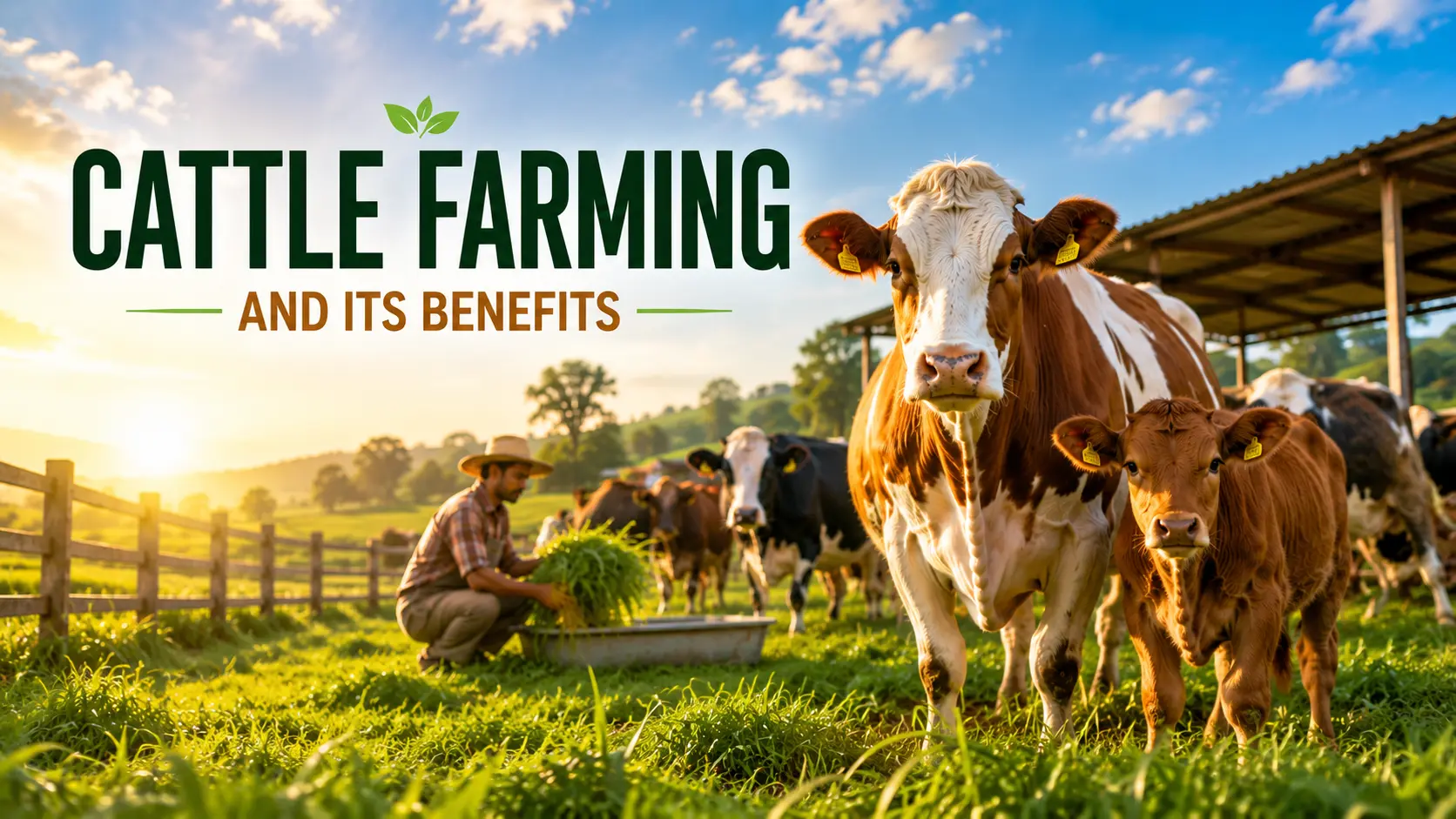
In the midst of the various agricultural activities, cattle farming also plays an essential role in boosting the Indian economy. It is regarded as the most profitable sector for rural development and significant income generation.
Whether it’s about milk production or organic farming support, cattle farming is way ahead in providing numerous economic and environmental benefits. In Indian households, cattle farming is the oldest tradition, mainly associated with dairy production and sustaining the rural livelihoods.
In the consistently evolving agri sector, there is a sharp demand for dairy products, organic manure, and sustainable farming practices; thus, cattle farming has positioned itself as a reliable source that unlocks promising opportunities. The farmers, small landowners, and entrepreneurs can largely benefit from this.
Today’s blog is aimed at helping you get a clear understanding of what is cattle farming, its types, importance, challenges, and benefits of cattle farming.
What is Cattle Farming?
Before we elaborate on the detailed aspects of this blog, it’s important to understand the term cattle farming.
Cattle farming is the practice of raising cattle for agricultural and commercial reasons. The various kinds of cattle are raised for a variety of purposes, like
- Milk Production
- Organic manure
- Meat production
- Agricultural labor
- Breeding
When we talk about animal husbandry, catter farming plays an important part. The farmers raise cattle in strict care, nutrition, well-maintained shelters, and health management systems. Based on diverse purposes, cattle farming can be started in small households or in large commercial farms. If we enlist some of the farming processes, it includes breeding practices, disease prevention, shelter management, dairy or other production, and feeding management.
Top Reasons Why Cattle Farming is Important
Moving further, we emphasized the major reasons why cattle farming is important. A few of the economic and agricultural benefits are
- Major Source of Rural Economy
In most of the rural regions, cattle farming majorly supports the community’s livelihood. The farmers can sustain their lives through livestock trading, selling vital food supplies, and other products.
- Boosts Agricultural Activities
Cattle farming is also a strong foundation for boosting several agricultural activities.
- Cattle produce organic manure that tremendously improves soil health and crop production
- Helps in reusing farm wastewater for crop irrigation
- Draught power for ploughing, irrigation, and pulling carts for the transportation of goods.
Cow dung is a natural organic fertilizer that is also used in biogas production.
- Nutritional Purposes
Milk and dairy products offer vital nutrients for improving humans’ diet, bone health, and daily nourishment, such as proteins, calcium, vitamins, and minerals. Whereas beef supplies essential amino acids and iron. The fertilizers generation enriches the soil health and helps in growing nutrient-dense crops for humans.
- Reduce Usage of Synthetic Fertilizers
Cattle farming supports sustainable agriculture by reducing dependency on synthetic chemical fertilizers. The natural fertiliser improves water retention and fosters the growth of beneficial microbes for robust and long-term crop production. Cattle manure rebuilds soil health & structure, making it looser and more aerated.
Types of Cattle Farming
Above, we have learned how cattle farming is important in boosting agricultural growth and the rural economy. Here, we will discuss the various types of cattle farming, each carrying a significant role and catering to various requirements.
- Dairy Farming
The most common forms of cattle farming in India include dairy farming. It majorly focuses on milk production and dairy product processing for urban and rural supply chains. Butter, cheese, and yogurt have longer shelf lives and thus reduce the chances of highly perishable raw milk. Dairy farming is India’s main agricultural enterprise that drives the growth of the nation as the top milk producer. The farmers raise high-yield cattle breeds for enhanced production.
- Beef Cattle Farming
Beef cattle farming is primarily focused on raising cattle for meat production. This is mainly practiced in countries with a large number of meat industries. Beef farming is mainly centered on breeding cows, raising calves, and providing a proper nutrient-rich diet to animals for faster weight gain.
- Organic Cattle Farming
Organic cattle farming prioritizes:
- Chemical-free approaches
- Natural feeding
- Livestock management
- Ethical animal care
- Commercial Cattle Farming
This farming is aimed at producing large-scale cattle for producing milk, meat, leather, and other cattle-based products for commercial purposes. This farming method uses scientific breeding methods, top nutrition plans, and the latest technologies to maximize profitability. Farmers in top meat and other products-demanding countries heavily invest in automated equipment, quality cattle breeds, well-equipped healthcare systems, and trained labour for sustainable production.
Common Breeds: Cattle Farming
Indigenous Indian Breeds
The popular Indian breeds include Gir, Sahiwal, Red Sindhi, Tharparkar. These breeds have higher disease resistance and adaptability to the local environment.
Exotic Breeds
These breeds are mainly used for higher milk production & diversity pet population, such as Holstein Friesian and Jersey.
Crossbred Cattle
Crossbred cattle are developed by breeding indigenous cattle breeds with exotic breeds to combine the traits of both. The key objective of crossbreeding is to improve overall productivity, milk production, and growth rate. By combining the features of the two different breeds, farmers can have breeds that are more suitable for commercial dairy farming.
Space & Infrastructure for Cattle Farming
The proper infrastructure and space management are other factors that help in promoting cattle farming.
- Cattle Shelter
A well-managed shelter should provide sufficient sunlight, good ventilation, and protection from adverse environmental conditions. The clean infrastructure tends to reduce potential diseases.
- Feeding System
To drive the overall growth, the feeding arrangement should be excellent. The clean drinking water and feeding system enhances animal health and thus results in better productivity.
- Storage Facilities
Farmers also require space for fodder storage, medicine storage, and managing equipment.
Health Management
A health management system enhances productivity and minimizes losses.
Vaccination
The regular veterinary checkups and timely vaccination prevent diseases and help cattle remain disease-free. They can be prevented from common diseases like foot & mouth disease, mastitis, and anthrax.
Sanitation
By managing proper hygiene & sanitation, the cattle can be prevented from any infections & diseases. It is essential to check cleanliness for improving animal welfare.
Breeding Care
Through modern breeding techniques like artificial insemination, we can improve breed quality and enhance cattle productivity.
Benefits of Cattle Farming
- Regular Income Source
In rural areas, selling milk and other products helps them generate a steady income. Additional income sources include cattle trading, organic manure, etc.
- Employment Opportunities
Cattle farming creates vast employment opportunities in
- Feed production
- Transportation
- Dairy processing
- Production of Natural Fertilizer
- Production of Natural Fertilizer
The cow dung is an organic fertilizer useful for organic farming, biogas production, etc. The rich manure minizies the usage of chemical fertilizers.
- Promotes Sustainability
Utilizing agricultural waste and producing natural fertilizer contribute to sustainability.
- Nutritious Food
Cattle produce milk that stands as a rich source for improving
nutrition and a healthy diet for millions of people worldwide.
- Enhances Economic Growth
The dairy and livestock sector contributes to India’s agricultural GDP and to rural upliftment.
Growth Possibilities in Cattle Farming In India
We can count on several factors that are responsible for the growth of cattle farming.
- Increasing demand for dairy products
- Focus on organic products
- Government policies and programs
- Advancements in livestock management
Modern cattle farming practices are helping farmers increase their monthly income and upgrade their lifestyle. Better productivity is adding to better financial growth. As there is a strong focus on health food & sustainable agriculture all over the world, the importance of cattle farming is reaching heights.
Challenges in Cattle Farming
Despite numerous benefits, cattle farming also faces challenges that we can’t overlook.
- Increasing feed costs is a challenge for several farmers
- Outbreak of several diseases affects productivity
- Lack of veterinary services results in health degradation
- Changing climate conditions reduced the possibility of environmental adaptivity
- Less market access creates financial obstacles
Wrapping Up
Hopefully, you have a clear understanding of what is cattle farming. From economic development to milk production, enhancing the rural scenario, and much more, cattle farming is supporting the farmers and society on a huge level. The profitability in cattle farming can be increased by proper animal care, providing nutrition, and maintaining sanitation.
In today’s world, cattle farming is a key contributor to agricultural development and rural prosperity. To grow further, its recommendable for farmers to focus on quality breeds, associate with government programs, observe the market demand, and adopt trending farming technologies.
The different types of feed, including green fodder, dry fodder, mineral supplements, etc., play an important role in enhancing the cattle’s health & producitivity. If we focus on feeding and nutrition in cattle farming, it leads to better reproduction and enhanced immunity.
If you want to learn or share more about cattle farming, livestock management, business opportunities, or sustainable agri practices, we are happy to collaborate with you in the comment section below.
Stay tuned! We will catch you in the next insightful blog.