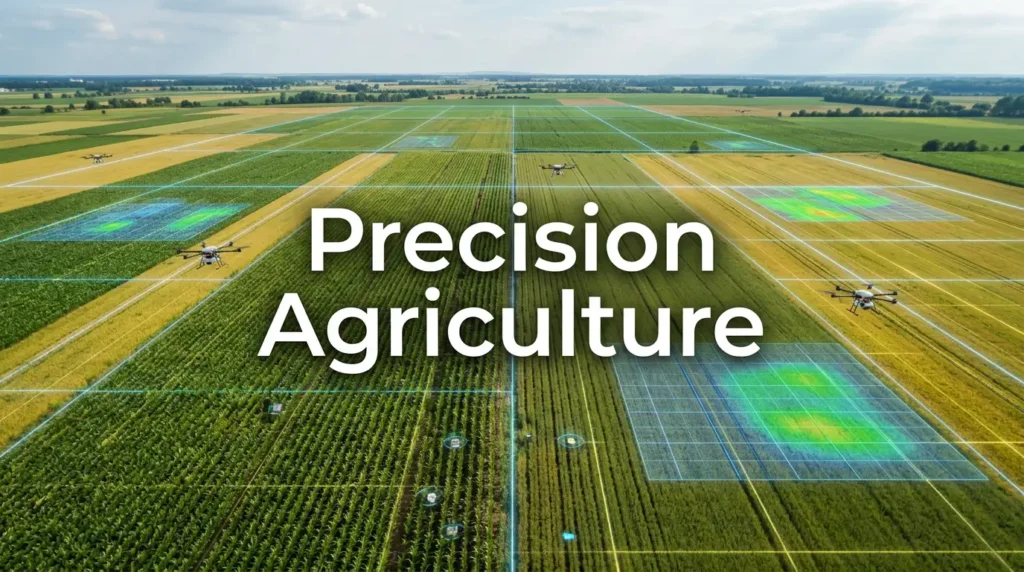
Smart organic farming (or precision agriculture in organic farming) combines high-tech tools like drones, sensors, AI, and smart machinery with natural, chemical-free farming methods.
Instead of relying on heavy manual labor or chemical sprays, smart organic farming uses real-time data and technology to grow healthy crops, control weeds naturally, and boost farm productivity.
What is Precision Agriculture in Organic Farming?
Precision agriculture in organic farming is the use of modern digital technology—such as GPS, field sensors, satellite imaging, and robotic weeders—to manage organic crops with exact precision.
It helps organic farmers monitor plant health, measure soil nutrients, and deliver precise amounts of water and organic fertilizers exactly where they are needed most.
Key Benefits of Smart Organic Farming
Combining high-tech precision tools with organic farming offers powerful ecological and operational advantages:
- Lower Labor Demands: Automated weeders and monitoring drones reduce the need for exhausting manual field labor.
- Higher Crop Yields: Early detection of plant stress and nutrient shortages prevents crop losses.
- Smarter Resource Use: Precise drip irrigation and targeted bio-fertilizer application cut down on water and input waste.
- Easier Organic Certification: Automated digital record-keeping simplifies compliance audits and paper-heavy inspection processes.
What are the Economic Benefits of Choosing High-Tech Organic Farming?
Adopting precision technology in organic farming transforms farm finances by reducing long-term operational costs and maximizing gross revenue.
1. Reduced Input Waste
Sensors map exact soil deficiencies across fields. Farmers apply bio-fertilizers and compost only where necessary, cutting waste and lowering natural input expenses.
2. Significant Labor Cost Savings
Manual hand-weeding is one of the highest expenses on an organic farm. AI-powered robotic weeders and laser tools manage weeds automatically, significantly cutting long-term wage bills.
3. Higher Crop Yields and Better Prices
By spotting early pest activity and water shortages using drone imaging, growers harvest larger, higher-quality yields that fetch top-tier organic market price premiums (20% to 50%+ higher than conventional crops).
4. Guaranteed Transparency & Market Access
Digital logs, blockchain tracking, and QR codes provide total supply chain transparency. Consumers willingly pay top prices when they can verify the exact organic journey from seed to market.
Traditional vs. Smart Organic Farming: Economic Comparison
| Feature | Traditional Organic Farming | Smart Precision Organic Farming | Economic Impact |
| Weed Control Costs | High (Heavy manual hand-weeding labor) | Lower (Automated AI weeders & lasers) | Cuts recurring payroll expenses. |
| Nutrient Management | Uniform spreading across entire field | Targeted variable-rate application | Saves raw materials and reduces input costs. |
| Crop Loss Risks | Higher (Pests spotted late by eye) | Lower (Early detection via drone sensors) | Protects harvest volume and gross revenue. |
| Data & Traceability | Manual paper logbooks | Automatic digital logs & QR tracking | Unlocks high-value direct-to-consumer sales. |
What Challenges Does Smart Organic Farming Face?
While high-tech organic farming offers clear long-term gains, farmers face several implementation hurdles:
- High Initial Equipment Costs: Drones, field sensors, and smart weeding machinery require significant upfront investment that can be difficult for small farms.
- Technical Learning Curve: Farmers must learn software systems, sensor maintenance, and data management alongside traditional farming skills.
- Rural Connectivity Issues: Remote fields often lack high-speed internet or mobile networks needed for real-time data streaming.
What is the Future of Precision Organic Farming?
The future of smart organic agriculture relies on accessible, scalable green technologies:
- Autonomous Solar Robots: Solar-powered field robots will continuously pick weeds, prune crops, and test soil without burning fossil fuels.
- Farming-as-a-Service (FaaS): Pay-per-use drone spraying and equipment rental models will allow small farms to access precision tech without buying expensive machinery.
- Predictive AI Crop Modeling: AI systems will analyze weather forecasts, soil trends, and market demands to instruct farmers on the exact ideal planting and harvesting days.
FAQs about Precision Agriculture
Precision agriculture in organic farming bridges the gap between ecological sustainability and modern technology. By swapping high-cost chemical dependence and manual labor for data, robotics, and smart sensors, organic growers lower operating expenses, protect land resilience, and achieve higher profit margins over time.