
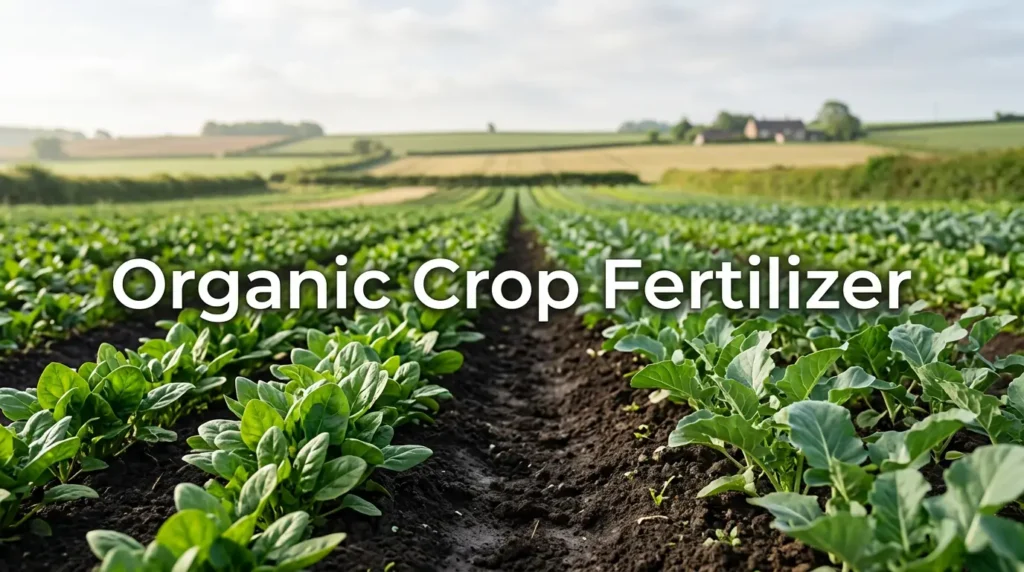
Organic crop fertilizers are natural plant nutrients derived from animal waste, plant matter, or naturally occurring minerals. Unlike synthetic chemical fertilizers, organic fertilizers feed both the soil biology and the crop without leaving harmful toxic residues behind.
Using organic fertilizers is the cornerstone of sustainable farming, helping growers produce healthy crops, lower operating costs, build soil fertility, and protect the surrounding ecosystem for generations.
What are Organic Crop Fertilizers?
Organic fertilizers are natural soil enhancers that release essential nutrients—like Nitrogen (N), Phosphorus (P), and Potassium (K)—gradually over time. They work in harmony with beneficial soil microbes, earthworms, and fungi to build a rich, living soil ecosystem.
The most common types of organic fertilizers include:
- Compost and Manure: Decomposed animal dung, poultry litter, and composted green waste rich in organic matter.
- Bio-Fertilizers: Micro-organism cultures (like Azotobacter or Rhizobium) that naturally fix atmospheric nitrogen into the soil.
- Green Manure: Fast-growing cover crops (like legumes or clover) grown specifically to be plowed back into the soil to add natural nitrogen.
- Organic Concentrates: Natural concentrates like neem cake, bone meal, seaweed extract, and vermicomposting (earthworm castings).
Key Benefits of Organic Fertilizers for Sustainable Farming

Switching to natural plant nutrition delivers long-term ecological and operational advantages:
- Restores Soil Structure: Organic matter improves soil aeration and increases water-holding capacity, helping crops survive heatwaves and dry spells.
- Prevents Chemical Runoff: Natural fertilizers bind nutrients to soil particles, preventing toxic chemical runoff into groundwater, lakes, and rivers.
- Sustained Nutrient Supply: Nutrients break down gradually as crops grow, eliminating the risk of chemical root burn or salt buildup.
- Protects Earthworms and Microbes: Chemical fertilizers can degrade living soil organisms; organic inputs nourish beneficial soil biology.
What are the Economic Benefits of Using Organic Fertilizers?
While chemical fertilizers offer a quick temporary surge, their costs compound every season. Organic fertilizers offer a far more stable and profitable long-term alternative.
1. Significant Input Savings via On-Farm Production
Farmers can produce high-quality organic fertilizers right on the farm using crop residues, livestock manure, compost pits, and vermicomposting setups. This drastically reduces cash outflow for commercial chemical inputs.
2. Immunity from Fossil Fuel & Energy Price Spikes
Synthetic fertilizers (like urea) track global oil and natural gas prices, leading to unpredictable price hikes. Organic inputs are locally sourced, keeping operational budgets steady and predictable.
3. Lower Water and Energy Expenses
Rich organic soil retains moisture far longer than chemically degraded land. Higher moisture retention reduces irrigation frequency, cutting electricity, diesel fuel, and water pumping bills.
4. Fetching Premium Market Prices
Crops grown with organic fertilizers qualify for organic market channels and certification, allowing growers to sell their harvest at 20% to 50%+ higher prices.
Synthetic Fertilizers vs. Organic Crop Fertilizers
| Feature | Synthetic Chemical Fertilizers | Organic Crop Fertilizers | Economic Impact |
| Input Source | Petroleum-based / Chemical synthesis | On-farm compost, manure, & bio-inputs | Reduces recurring operational cash expenses. |
| Nutrient Release | Immediate chemical flush (often leaches) | Slow, steady release matched to plant growth | Minimizes wasted nutrients and reduces repeat applications. |
| Impact on Soil | Degrades soil biology and compacts ground | Builds organic carbon and earthworm populations | Protects long-term farm asset value and soil fertility. |
| Market Value | Sells as standard commodity | Sells at premium organic rates | Increases gross farm income per harvest. |
What Challenges Do Organic Fertilizers Present?
Transitioning from chemical to organic fertilizers involves a few initial hurdles:
- Lower Initial Concentration: Organic fertilizers contain lower concentrations of active nutrients by weight compared to concentrated chemical bags, requiring larger volumes.
- Slower Initial Response: Because organic nutrients depend on microbial activity to release, plant response is gradual rather than instant.
- Storage and Handling: Storing raw manure or maintaining active compost pits requires dedicated farm space and proper management to avoid odors or pest issues.
What is the Future of Organic Crop Fertilizers?
The global market for organic fertilizers is expanding rapidly as sustainable farming expands worldwide:
- Commercial Liquid Bio-Fertilizers: Standardized liquid bio-fertilizer formulations allow easy application through modern drip irrigation and spray systems.
- Fortified Bio-Organic Granules: Manufacturers are combining beneficial microbes with concentrated organic materials to create easy-to-apply pelletized products.
- Government Policy Incentives: Governments worldwide are introducing subsidies and support schemes to encourage natural and bio-fertilizer adoption to reduce chemical import costs.
FAQs about Organic Crop Fertilizers
Organic crop fertilizers are essential for sustainable, high-margin farming. By replacing expensive synthetic chemicals with natural composts, green manures, and bio-fertilizers, growers can lower input costs, restore soil health, conserve water, and secure higher market prices for clean, healthy food.