Organic certification is an official seal of approval given to farms and food producers. It proves that crops, livestock, and processed foods are grown and handled according to strict organic standards—without synthetic fertilizers, toxic chemical pesticides, GMOs, or artificial growth hormones.
For consumers, it is proof of clean, healthy food. For farmers, it is a trusted key that unlocks higher profits and premium markets.
What is Organic Certification?
Organic farming certification is an authentication, confirmation, and verification process that proves agricultural products and food items are grown, harvested, and processed according to strict government or international organic standards.
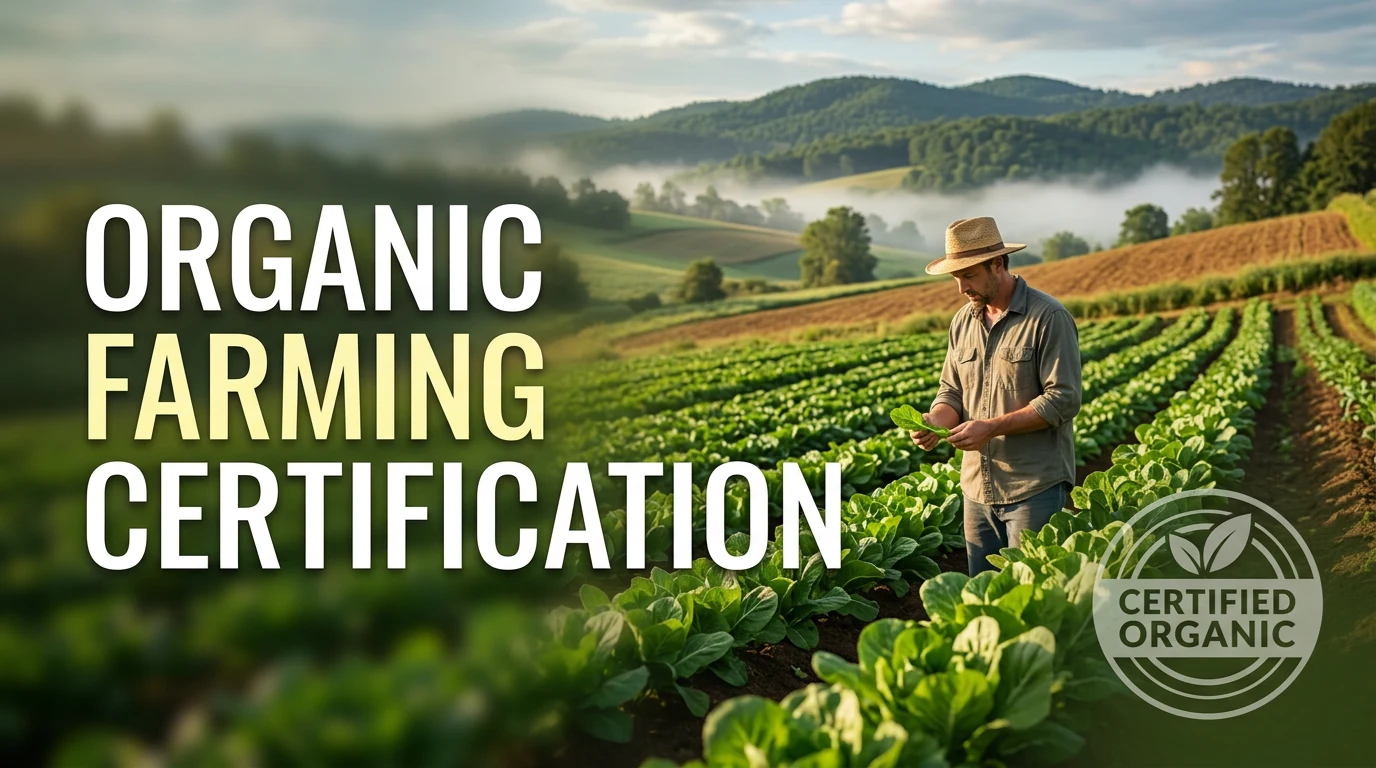
During this time and every year after, independent inspectors audit the farm’s soil quality, water sources, seeds, pest control methods, and record-keeping to ensure total compliance with organic laws.
A farm must go through a transition period (usually 2 to 3 years) without chemical use.
Why Organic Certification Matters for Consumers
When buyers pick up a product with a certified organic label, they get complete confidence about what is on their plate:
- Guaranteed Chemical-Free Food: Guarantees produce is free from synthetic pesticide residues, toxic weedkillers, and chemical fertilizers.
- Non-GMO Assurance: Guarantees the food is strictly free from genetically engineered organisms.
- Better Animal Welfare: Ensures certified organic meat, dairy, and eggs come from livestock given organic feed, outdoor access, and humane living conditions without routine antibiotics.
- Complete Traceability: Allows consumers to trace their food back to audited, transparent farms.
What are the Economic Benefits of Organic Certification for Farmers?
While getting certified requires effort and patience, the financial payout makes it one of the smartest investments a grower can make.
1. High Premium Market Prices
Uncertified produce sells at standard, low commodity prices—even if grown naturally. Certification allows farmers to legally use the “Organic” label and command 20% to 50%+ higher market prices.
2. Access to Premium Export & Supermarket Chains
Major retail chains, health food stores, and international importers strictly require official organic documentation. Certification gives small and large growers direct access to high-value markets.
3. Customer Trust and Brand Loyalty
Modern buyers readily pay more for food they trust. Official certification builds instant credibility, helping farmers establish loyal direct-to-consumer relationships through subscription boxes, farm stalls, and online stores.
4. Stronger Pricing Power
Standard farm commodities suffer from severe market price drops. Certified organic goods enjoy stable, growing demand, protecting farmers from sudden price crashes.
Non-Certified vs. Certified Organic Farming: Economic Comparison
| Aspect | Uncertified Organic Farming | Certified Organic Farming | Economic Impact |
| Market Labeling | Cannot legally use “Organic” seal | Uses official certified seal | Unlocks high retail price premiums. |
| Selling Outlets | Local markets & standard dealers | Supermarket chains, specialized retail, & exports | Expands market access and customer reach. |
| Selling Price | Standard commodity rates | 20%–50%+ Premium rates | Drives significantly higher net revenue per harvest. |
| Consumer Trust | Relies on word-of-mouth | Backed by third-party government audits | Builds long-term customer loyalty and recurring sales. |
What Challenges Do Farmers Face with Organic Certification?
Obtaining and keeping organic certification involves real operational hurdles:
- The 3-Year Transition Gap: Land must be managed organically for up to 3 years before produce can carry the certified label. Farmers often face lower initial yields without receiving premium prices yet.
- Audit and Certification Fees: Annual inspection fees, paperwork, and testing costs can be expensive for small family farms.
- Strict Record-Keeping: Farmers must keep meticulous digital or physical logs of seed purchases, soil inputs, pest control measures, and crop sales for annual audits.
What is the Future of Organic Certification?
The organic certification landscape is evolving to become cheaper, faster, and more accessible:
- Group Certification for Smallholders: Governments and cooperatives now allow groups of small farmers to apply together, sharing inspection costs and reducing paperwork burden.
- Participatory Guarantee Systems (PGS): Peer-review certification models let local farming communities certify one another, providing an affordable alternative for domestic sales.
- Digital & Blockchain Audits: Smart sensors and digital logbooks are replacing manual paper audits, making annual compliance checks instant and foolproof.
FAQs about Organic Certification
Organic certification bridges the gap between honest farmers and conscious consumers. For buyers, it delivers guaranteed food safety and transparency. For farmers, it turns sustainable, chemical-free agriculture into a highly profitable long-term business through premium market prices, export access, and trusted consumer demand.