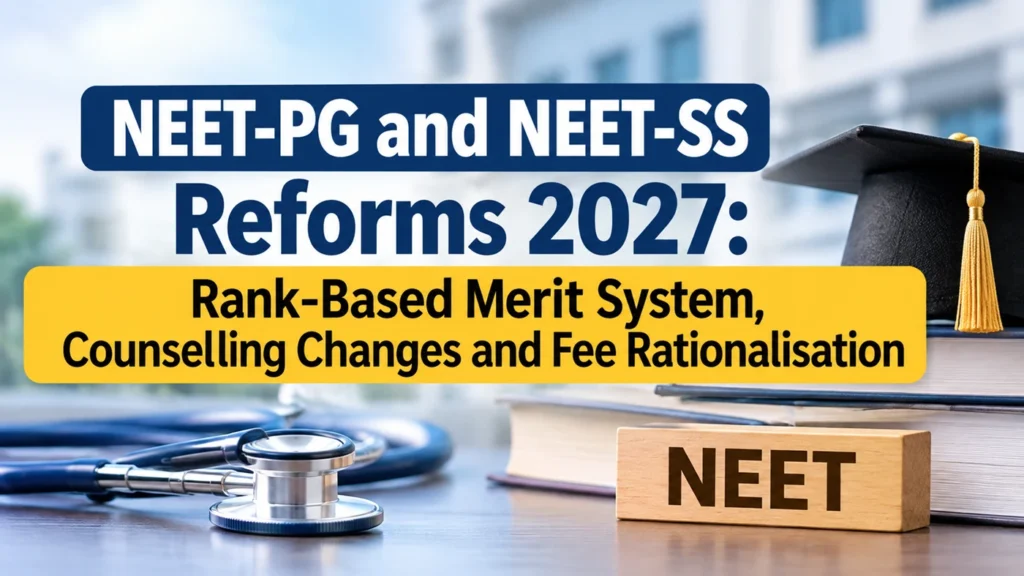
India’s postgraduate medical admission system could see significant changes from 2027, with the National Medical Commission (NMC) proposing reforms to improve transparency, merit-based admissions, and counseling efficiency. These changes aim to address concerns about qualifying cut-offs, vacant seats, counseling delays, and disparities in postgraduate medical education.
1. Shift From Percentile-Based to Rank-Based Merit System
One of the major proposed reforms is the transition from the existing percentile-based qualifying system to a rank-based merit system for NEET-PG and NEET-SS examinations.
Under this framework, candidates will be ranked by their exam performance, and admissions will be based on ranks rather than percentile thresholds. Results are also expected to declare ranks instead of percentile marks.
The proposal follows controversy over reducing NEET-PG qualifying cut-offs during the 2025–26 counseling, which raised concerns about academic standards and admitting candidates with zero or negative marks. The changes aim to maintain merit while addressing vacant postgraduate seats.
2. Digitalisation of Medical Coupling and Admissions
The expert committee recommended administrative improvements to make postgraduate medical counseling more transparent, efficient, and accountable.
Key recommendations include:
- Fully Digitalised Counselling: The Medical Counseling Committee (MCC) aims to introduce an online counseling process with minimal human intervention.
- Freeze and Float Options: Candidates will be categorized as Freeze or Float. Freeze candidates must physically report to their allotted institutions, while Float candidates can accept seats online and participate in upgradation.
- Streamlined Fee Payments: Candidates will pay only after they decide to take admission.
- Verified Seat Matrix: The NMC will integrate with counseling software to verify seat availability and reduce discrepancies.
- Prevention of Seat Blocking: KYC verification and biometric authentication are being considered to prevent irregularities during admissions.
- Improved Coordination: Online sharing of exam results with state counseling authorities and Directorates of Medical Education is being explored.
3. Fee Rationalisation and Better Incentives for Medical Residents
Another key aspect of the reforms focuses on improving postgraduate medical education and addressing financial disparities.
The expert panel has recommended rationalizing fees for non-clinical postgraduate courses to make them more accessible and attractive to medical graduates.
Other recommendations include revising stipends for medical residents, eliminating salary discrimination between clinical and non-clinical branches, and adding increments after super-specialty qualifications.
The committee also suggested additional incentives for doctors serving in rural areas. These measures aim to encourage professionals to explore different specializations and promote a balanced distribution of qualified doctors across the country.
4. A Substantial Step Towards Reforming Medical Education
The proposed reforms mark an important development in India’s postgraduate medical admission framework. Moving to rank-based merit, improving digital counseling, and rationalizing fees could create a more transparent and predictable admission process.
However, these recommendations are still subject to judicial consideration, regulatory finalization, and stakeholder consultations. The final implementation framework will depend on the Supreme Court’s directions and the formal regulations issued by the competent authorities.
With the 2027 timeline approaching, medical aspirants, institutions, and stakeholders will closely monitor developments. If implemented, these reforms could bring meaningful changes to postgraduate admissions while strengthening transparency, academic merit, and the medical education ecosystem in India.
References:
- https://www.bhaskar.com/career/news/neet-pg-ss-rank-based-merit-system-proposal-supreme-court-update-139591246.html
- https://www.livelaw.in/top-stories/neet-pg-to-adopt-rank-based-system-instead-of-percentile-expert-committee-tells-supreme-court-557156
- https://www.hindustantimes.com/india-news/rankbased-neet-pg-merit-system-fee-rationalisation-among-key-panel-recommendations-101793730770350.html
- https://www.etvbharat.com/en/bharat/expert-committee-to-sc-instead-of-percentile-neet-pg-to-adopt-rank-based-system-enn26110307807