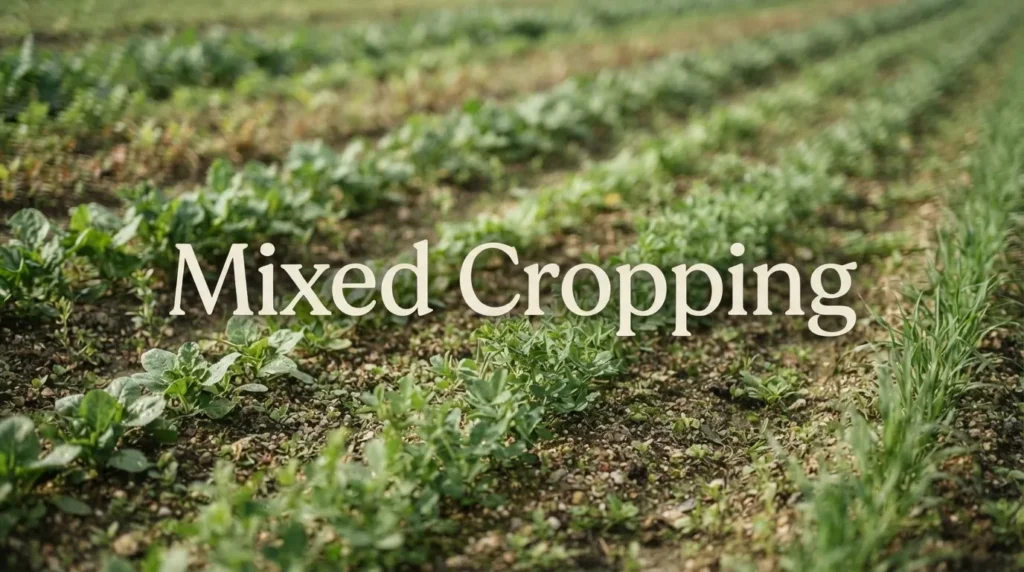
Mixed cropping is an agricultural practice in which two or more crops are grown together on the same piece of land during the same growing season. The crops are cultivated simultaneously without arranging them in a specific row pattern. This traditional farming method helps farmers reduce the risk of crop failure, improve land utilization, and maintain soil fertility.
What is Mixed Cropping?
Mixed cropping refers to growing two or more crops together on the same field at the same time. Farmers generally select crops with different nutrient requirements, growth patterns, and water needs so that they can utilize available resources more efficiently. For example, wheat and mustard, or maize and pulses, may be grown together. The primary objective is to minimize the risk of total crop failure and provide farmers with a more stable harvest.
Types of Mixed Cropping
Cereal and Pulse Cropping: farmers will grow their cereals (wheat, maize, etc.) alongside their pulses (chickpeas, lentils, peas, etc.). The pulses can contribute to the nitrogen in the soil via biological nitrogen fixation.
Cereal and Oilseed Cropping: Crops such as wheat and mustard are cultivated together to diversify farm output and make better use of available resources.
Multiple Crop Combinations: Farmers may cultivate more than two crops together, depending on local climate, soil conditions, and farming requirements.
Benefits of Mixed Cropping
Reduces the Risk of Crop Failure: By growing a variety of crops, you’re not reliant on a single harvest. If one crop fails due to pests, disease, or bad weather, then you’ll still have some income or food from another.
Improves Soil Fertility: Including legumes in a mixed cropping system can improve nitrogen availability in the soil through biological nitrogen fixation.
Better Utilisation of Resources: Crops with different root depths and growth habits may use sunlight, water and nutrients from different parts of the available growing space.
Controls the Spread of Pests and Diseases: Crop diversity can make it harder for certain crop-specific pests and diseases to spread rapidly across the entire field, although it does not eliminate pest problems.
Provides a Range of Farm Produce: You can harvest a range of crops from the same field, which will obviously meet household food requirements and provide a range of income.
Supports Sustainable Agriculture: Mixed cropping can be a contributor to sustainable agriculture through the promotion of crop diversity and reduced reliance on a single crop.
Difference Between Mixed Cropping and Intercropping
Mixed cropping and intercropping both involve growing more than one crop in the same field in the same season. The difference between the two is in the way the crops are planted. In mixed cropping, the crops are grown together with no particular row arrangement. In intercropping, the crops are planted in a planned manner, usually in separate rows or strips. Intercropping allows for a degree of control over the spacing of the crops and the amount of resources each crop will get.
Challenges of Mixed Cropping
Different crops will be competing for light, water, nutrients, and space if not selected carefully. The harvesting and application of fertilizer and pesticide can also become a bit of a nightmare, as the crops may be mature at different times or may have different requirements. You therefore have to select your crop combinations very carefully in the first place to ensure they are compatible with the local conditions.
Importance of Mixed Cropping in Indian Agriculture
Mixed cropping is of particular relevance to small and marginal farmers in India, where the unpredictability of rainfall, the changing weather patterns and crop losses can all have an impact on agricultural income. Growing cereals, pulses and oilseeds together can provide a degree of diversification and therefore help to mitigate the risks of depending on a single crop. When properly planned, it can also be a means of improving soil health and enhancing the resilience of the farming system.
FAQs about Mixed Cropping
Mixed cropping is a good practice in that it promotes crop diversity and enables the farmer to cope with the inherent uncertainties of farming. It’s a way of growing a number of crops that are compatible with each other. This reduces the risk of total crop failure, makes more efficient use of the resources available, and gives the farmer a range of produce. With the right crops and the right management, it can be a very effective way of farming and will lead to a more resilient and sustainable system.