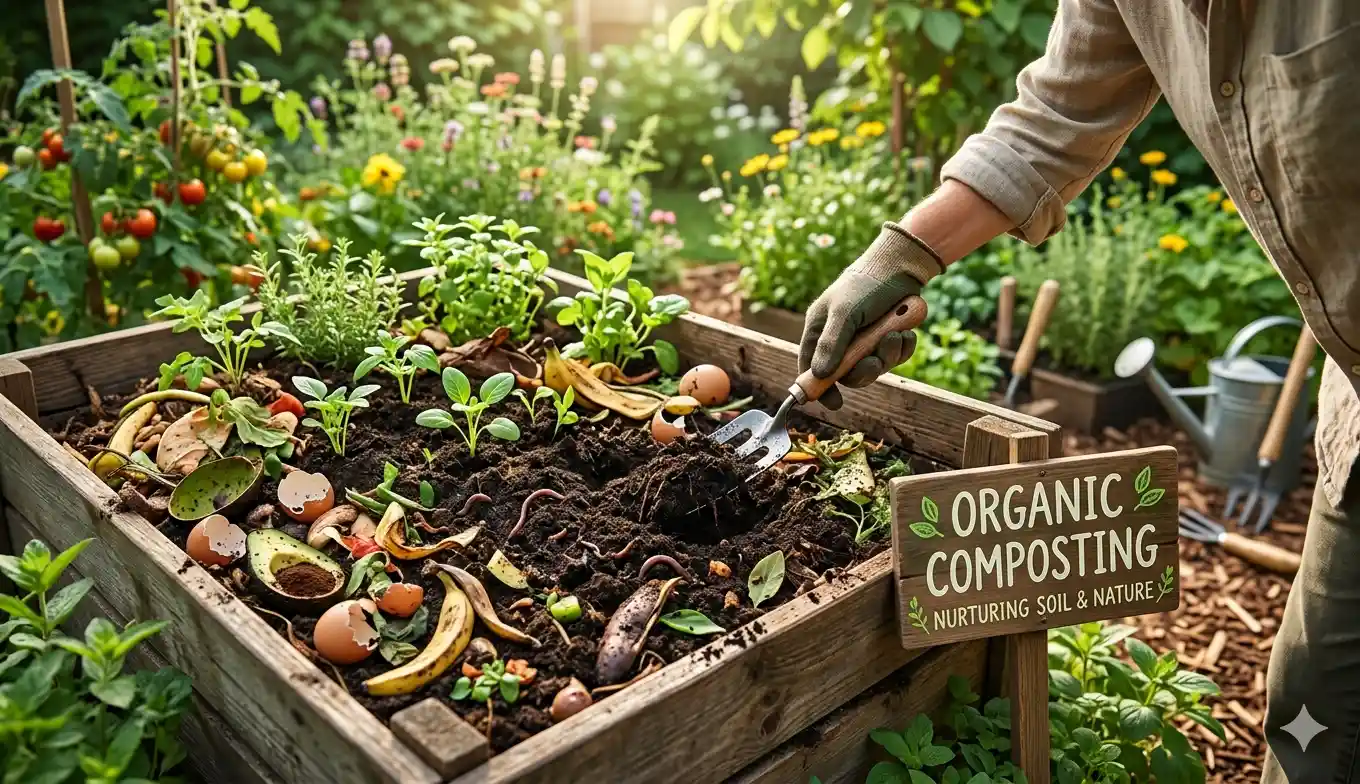
What come in goes back around; that’s how time plays its role in agriculture. Synthetic chemicals that harm the environment and disrupt the natural composition of soil are discarded in organic Composting , instead the process relies heavily on natural inputs and ecological processes to avoid the use of chemical fertilizers, pesticides, genetically modified organisms and artificial growth regulators, all of that just to improve soil health, biodiversity and overall sustainability.
What is Organic Composting?
To generate a safe and nutritious ground for farming, free from all the chemicals and maintaining long term environmental balance, that process of making the best from waste is called organic farming.
It integrates practices like
- Crop rotation
- Composting
- Green manure
- Biological pest control
Key benefits of Organic Composting
The entire process to make the environment safe and bio friendly has been proven to bring a lot of benefits to the table
1. Premium market demand
Using Organic Composting like manure and plant wastes acts as a natural fertilizer and pesticide that helps to induce soil fertility resulting in fruitful growth prevention in soil degradation over time. Microbial activity and soil structure increases, resulting in safe and consumption friendly food that is high in demand and labeled clean toxin free, farm fresh. Organic soil also helps with water retention, reducing the need for irrigation over time.
2. Premium market demand
Organic produce are often sold at high end stores and farmer’s markets due to it being high in demand in urban and export areas for clean quality and pesticide free produce.
The global demand is growing with time as people are being more aware and conscious of what they eat and thus raising high opportunities in retail chains, export markets and direct consumer sales. The sale being so profitable, it works out for the best even during the slightly lower yields initially.
3. Eco friendly
Apart from being great for soil health, organic compost carries a lot more on its shoulders. It helps in reducing pollution in all three areas- soil, water and air. It is great for promoting biodiversity by encouraging mixed cropping and crop rotations, increasing pollination and micro-organic activity. Organic compost has made its perks in reducing the green house emission and supporting climate resilient farming practices as organically induced soil helps retain more carbon and be more fertile.
What are the challenges of Organic composting?
1. Initiation process
As fascinating as it sounds, setting up the organic compost is bit of a tedious job. Firstly getting the certification is very necessary and requires to follow a series of complicated guidelines, which is both time consuming and expensive. Secondly the setup is manually excruciating, as it requires twice the amount of manual pressure in tasks like weeding, pest control and the preparation of composition. Thirdly finding the right buyers and vendors is a task in itself.
2. Knowledge and training gap
Farmers practicing the concept need to have proper knowledge and training to achieve the best results. They must understand and go deep in the studies of soil biology, crop rotation and organic inputs. Apart from that they must know how pesticides work and what are the natural pest repellants and biological agents that help chemical prevention.
3. Shelf Life
Organic produce isn’t available in all areas and so is keep it secure a big deal. Organic produce has a shorter shelf life and replenishes easy, and thus requires a sturdy and better secure storage facility.
Solution to these Organic Composting challenges
Organic Composting brings hope at the end of the road.
- Low yields can be managed by compromising only a partial piece of land instead of the entire lot, so that even if organic produce may take 2-3 years initially the other hector yields properly and doesn’t disrupt income or cultivation.
- Government schemes and programs should be initiated to help with farming knowledge, certification and training; along with that farming groups and cooperatives should be made.
- Market access should be made easier by initiating direct selling’s, farmer markets, and online platforms to help increase sale.
Also Read This Helpful Blog- Vertical Farming: Growing Crops in the City