
Mushroom Farming
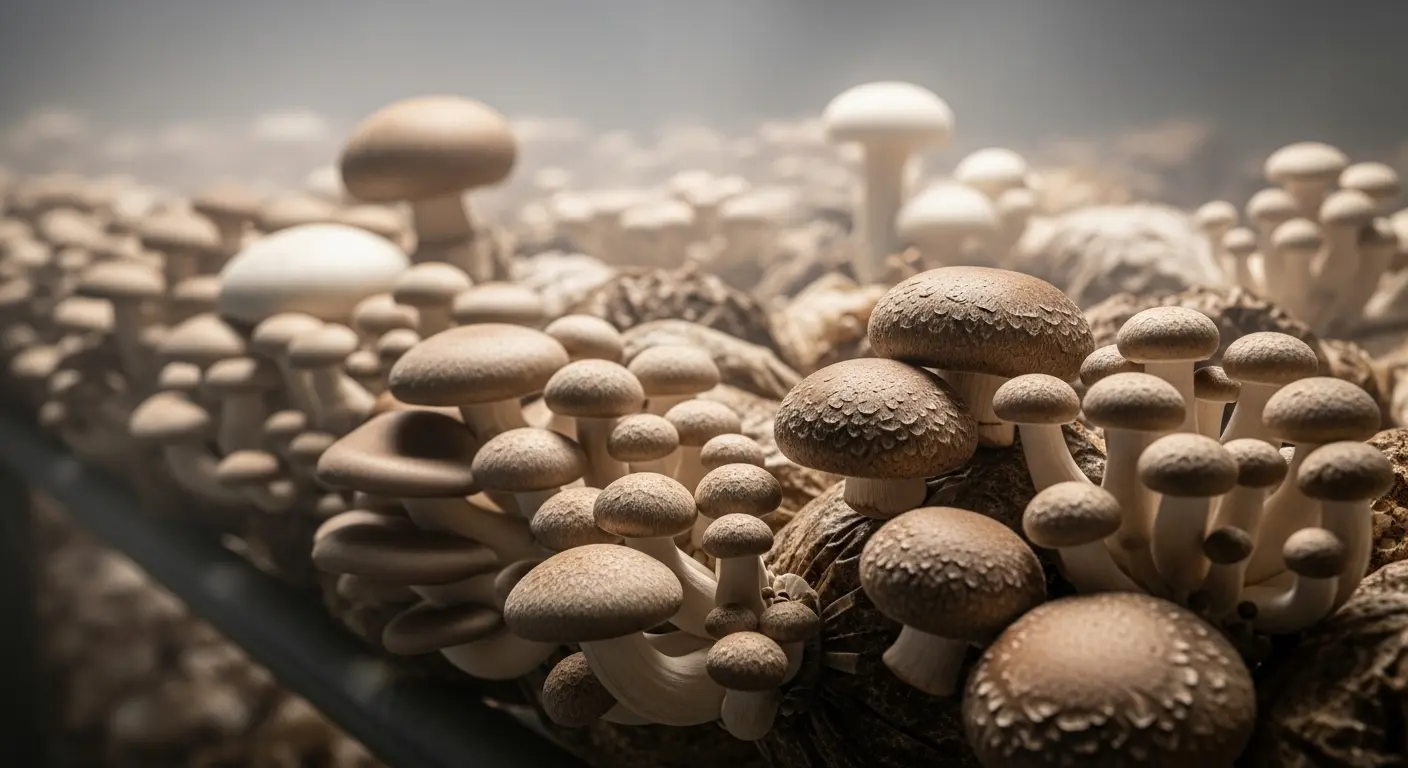
The journey from being a poisonous fungus to being one of the best edible sources of plant protein; mushrooms have come a long way. With a wide variety of ranges to grow, mushroom farming has become extremely helpful and popular in India. Unlike traditional crops, mushrooms do not require sunlight or soil. They grow on organic waste materials such as straw, husk, sawdust, or compost, making them a sustainable and space-efficient farming option.
What is Mushroom Farming?
Common edible mushroom that can grow in India are- Button mushroom, oyster mushroom, Milky mushroom and very limited of Shiitake mushrooms (only in specific regions).
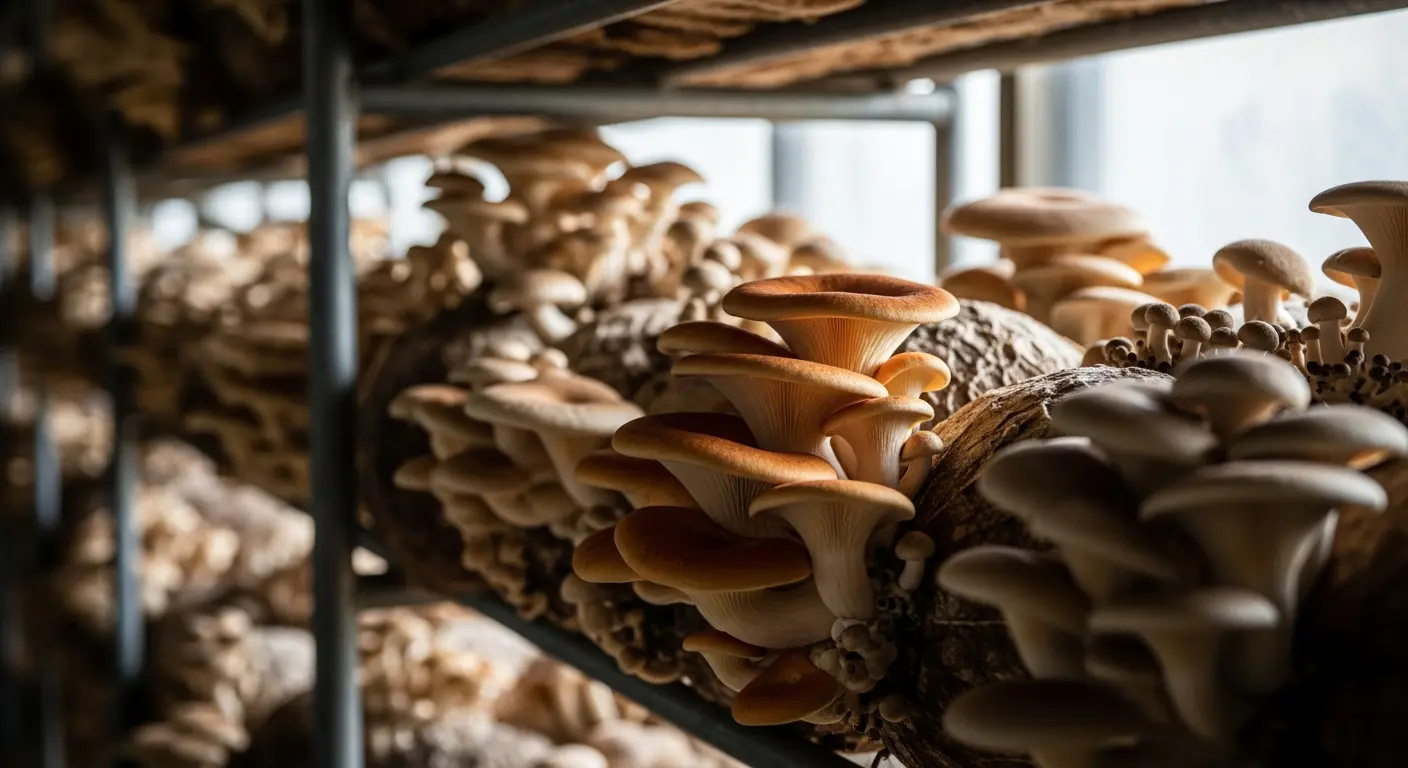
The process of converting this fungal growth into an edible source requires the right amount of environment and going throw stages of certain farming processes.
- Substrate Preparation– Organic and dry materials like wheat straw, or paddy straw are cleaned, soaked and sterilized, making a clean starter for farming.
- Spawning– Mushroom seeds often called spawn are mixed with the above prepared substrate.
- Incubation– The mixture is stored in a dark, humid environment for mycelium growth.
- Fruiting– With Proper temperature, humidity, and ventilation mushroom formation is triggered
- Harvesting– Within 20-60 days, mushrooms are harvested but it mostly depends on the variety.
Key benefits of Mushroom farming
To sustain the economy and maintain the harmony and balance mushroom farming is rapidly gaining popularity among both rural and urban farmers due to its profitability, sustainability and suitability.
- Low land requirement– Unlike traditional crops, mushrooms doesn’t need agricultural land or open wide fields; they can be easily grown indoors, in rooms, sheds or even small spaces. Urban farmers seek benefit from this kind of farming as it can be done on terrace and backyard setups without much of a hassle.
- Economic Growth– Since it’s an easy farming no heavy machinery or tractors are required for its cultivation instead simple infrastructure like rakes, trays or bags is more than enough. To make it accessible to small farmers, women entrepreneurs or individuals with small marginal landholdings, basic mushroom units can be started with very small capital, thus putting in very minimal initial investment. Due to its harvesting period being 20-60 days depending on its variety, mushrooms ensure a continuous cash flow by growing multiple cycles all year round. Since it’s a high yielding crop it helps produce more food per square meter than compared to traditional crops, ensuring that even a small room can lead to large quantities of mushroom production; therefore becoming a sustainable source of quick income. Due to its multiple stages of production, mushroom farming generates employment by creating jobs at its every stage.
It can also be a secondary source of income for farmers who already grow traditional crops. - Sustainable– Due to the eco friendly process of farming using agricultural waste like- wheat straws, corn cobs, saw dust or sugarcane bagasse, mushroom farming is very environmentally beneficial. It helps converting waste into valuable food, reduce environmental pollution and promotes overall sustainable and circular agriculture. Since it’s an eco friendly crop it can be grown all year around sustaining droughts, floods or any other extreme climatic changes. The production requires less water than most crops produces minimal chemical runoff and helps in water recycling. After harvesting mushroom substrate can later be recycled into animal feed, organic composts or organic fertilizers.
- Nutritional crop– Mushrooms are considered a super food because they are highly rich in protein, High in fiber, Low in fat and calories and also a Good source of B vitamins, vitamin D, potassium, and antioxidants. It is of high value due to its many health benefits like- Improved immunity, Better heart health, Support for weight management and perfectly suitable for diabetics and vegetarians.
What are the challenges of mushroom farming?
As easy as it sounds, there are major factors hampering the concept and causing issues for the farmers to sustain a decent livelihood.
- Temperature Sensitivity– Many mushroom varieties require specific temperature ranges, making cultivation difficult in extreme climates.
- Lack of technological knowledge– Farmers may face issues with contamination, poor yield, or disease due to limited training.
- Short Shelf life– Freshly produced mushrooms spoil quickly without cold storage and it could be even more impactful in rural areas where there is a lack of refrigeration.
- Expenses– Climate controlled mushroom farms require a bit of a higher investment in order to ace the perfect conditions for mushroom farming.
Also read: What is Pisciculture? Importance, Benefits, and Challenges
Solution to these challenges
There’s always hope at the end of the road.
- Temperature Sensitivity– Different mushrooms require different settings, it is very important to understand as extreme heat or cold changes could lead to reduced yields, and thus choosing the perfect region is necessary.
Oyster mushrooms– Suitable for warm climates
Milky mushrooms– Ideal for tropical regions
Button mushrooms– Suitable for colder regions.
Grow seasonally if climate control is difficult and use measures like whitewashing, straw insulations desert coolers to control temperatures. - Short Shelf life– Mushrooms have small shelf life if not stored in refrigerators.
Small cooling units could be installed and freshly harvested mushrooms could be sold to local markets and neighboring consumers. Different sub products can be manufactured from mushrooms like mushroom powder, pickles or dried mushrooms and can be sold. Using ventilated packaging can also help extend freshness. - Market Fluctuations– Encourage local practices and selling to direct vendors and local market shops or grocery stores and vegetable markets. Extend out to restaurants and cafes to sustain and balance supply and demand chain.
- Hygiene management– Maintaining strict hygiene is very essential to prevent mold, bacteria and pest build up. Always disinfect and sterilize the rooms and substrates properly before starting the cultivation process. Try and use high quality seeds and ensure controlled temperature is regulated to avoid humidity and ventilation is supported to prevent mold growth.
- Finances– Starting with low cost ventilation units, using locally available materials like bamboo, thatched roofs, and mud or brick walls can help manage finances. Government support from government schemes can help as well.
FAQs about Mushroom Farming
Mushroom farming is the cultivation of edible fungi using organic materials like straw, sawdust, or compost under controlled conditions. It can be done indoors with minimal land.
Depending on the variety:
1. Oyster mushrooms: 20–30 days
2. Button mushrooms: 30–45 days
3. Milky mushrooms: 30–40 days
No, Mushrooms grow best in dark, humid environments with proper ventilation.
Yes, Many people grow mushrooms at home using:
1. Plastic bags
2. Small racks
3. Simple indoor setup