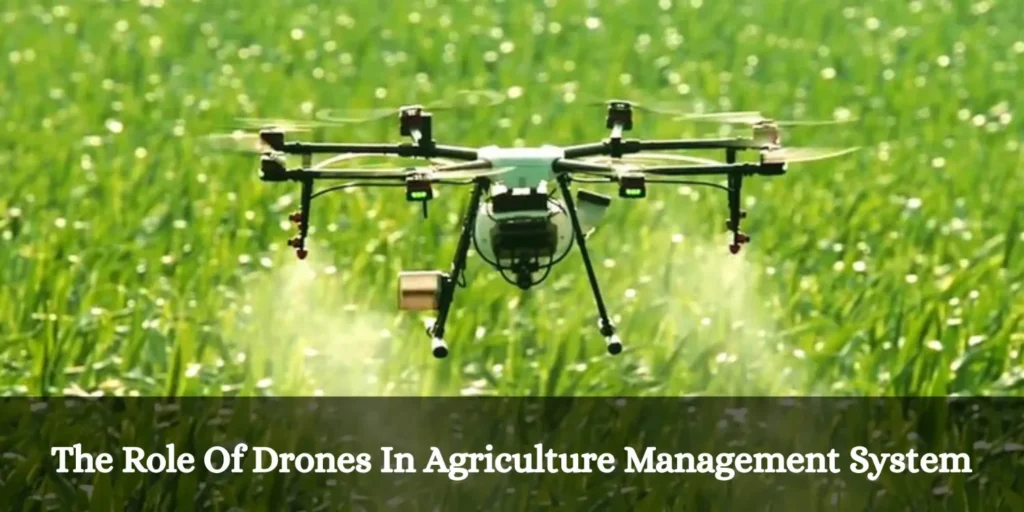
Agricultural drones (also known as Unmanned Aerial Vehicles or UAVs) are transforming modern farming. By flying over fields equipped with advanced sensors, cameras, and GPS, drones give farmers a complete bird’s-eye view of their crops.
Instead of spending hours walking through vast fields to check plant health, farmers use drones to collect real-time field data, monitor crop health, apply fertilizers, and save time and money.
What is a Drone in Agricultural Management Systems?
In a modern agriculture management system, a drone acts as a high-tech data collector and aerial worker. It integrates directly with farm management software, converting aerial imaging into actionable field maps.
Drones allow farmers to practice precision agriculture—delivering the right treatment (water, seed, or fertilizer) to the exact spot that needs it, rather than treating an entire field uniformly.
Key Benefits of Using Drones in Agriculture
Using drones offers massive operational and environmental advantages over traditional farming methods:
- Speed and Efficiency: Cover hundreds of acres in minutes, completing crop inspections that used to take days on foot.
- Early Spotting of Issues: Multispectral cameras detect crop stress, fungal infections, and pest attacks days before they are visible to the human eye.
- Targeted Spraying: Apply liquid fertilizers and bio-pesticides with pinpoint accuracy, cutting down chemical runoff and protecting nearby water sources.
- Resource Savings: Drastically reduce water, fuel, and chemical usage by treating only problem areas.
What Are the Economic Benefits of Choosing Drone Technology?
Integrating drones into farm management delivers immediate and long-term financial returns.
1. Massive Savings on Chemical and Fertilizer Costs
Traditional tractor spraying covers entire fields, wasting expensive sprays on healthy crops. Drones use spot-spraying technology to treat only affected areas, cutting chemical and fertilizer bills by up to 20% to 40%.
2. Lower Labor and Fuel Outlays
Manual field scouting requires high labor hours, and heavy machinery consumes expensive diesel fuel. Drones run on rechargeable batteries and automate field mapping, drastically slashing tractor fuel and payroll costs.
3. Yield Protection and Higher Crop Revenue
By spotting water shortages, nutrient deficiencies, or pest swarms early, farmers can take immediate action. Preventing crop losses directly protects crop volume and farm revenue during harvest.
4. Fast Crop Insurance Claim Settlements
When severe weather, floods, or hail damage crops, insurance claims can take months. Drones create instant, accurate 3D maps of damaged areas, providing undeniable proof to insurers for faster payout settlements.
Traditional Field Management vs. Drone-Powered Farming
| Feature | Traditional Farm Management | Drone-Powered Farm Management | Economic Impact |
| Field Scouting | Slow, manual walking across fields | Automated aerial flights in minutes | Saves labor hours and cuts payroll expenses. |
| Fertilizer & Spraying | Uniform blanket spraying by tractor | Targeted spot-spraying from the air | Cuts chemical purchases and tractor fuel costs. |
| Pest & Disease Control | Reactive (treated after damage shows) | Proactive (detected early via thermal/IR sensors) | Minimizes harvest loss and protects revenue. |
| Field Mapping | Basic satellite images or physical estimates | High-definition 3D orthomosaic maps | Improves land planning and input accuracy. |
What Challenges Do Agricultural Drones Face?
Despite their benefits, adopting agricultural drones comes with a few initial challenges:
- High Upfront Costs: Buying high-spec agricultural drones with advanced thermal or multispectral sensors requires significant initial capital.
- Licensing and Regulations: Many regions require drone pilot licenses, line-of-sight flying permits, and strict airspace clearances.
- Flight Time and Battery Limits: Most agricultural drones have a battery life of 20 to 40 minutes per flight, requiring farmers to carry multiple extra batteries into the field.
- Weather Sensitivity: Drones cannot fly effectively during heavy rain, high winds, or thick fog.
What is the Future of Drones in Agriculture?
The global agricultural drone market is growing rapidly as technology improves and costs fall:
- Fully Autonomous Swarm Drones: Future systems will deploy teams (“swarms”) of autonomous drones that coordinate with each other to map, spray, and monitor large farms simultaneously.
- AI-Powered Predictive Analytics: AI software will analyze drone images automatically and send instant alerts to a farmer’s smartphone—identifying the exact weed species or nutrient deficiency in real time.
- Drone-as-a-Service (DaaS): Specialized service providers are offering pay-per-acre drone mapping and spraying, allowing small farmers to access high-tech drones without buying equipment outright.
FAQs about the Role of Drone in Agriculture Management System
The role of drones in agriculture management systems is shifting farming from guesswork to precision data. By giving growers clear visibility over every acre, drones help lower operational expenses, optimize resource use, protect crop yields, and drive long-term farm profitability.