
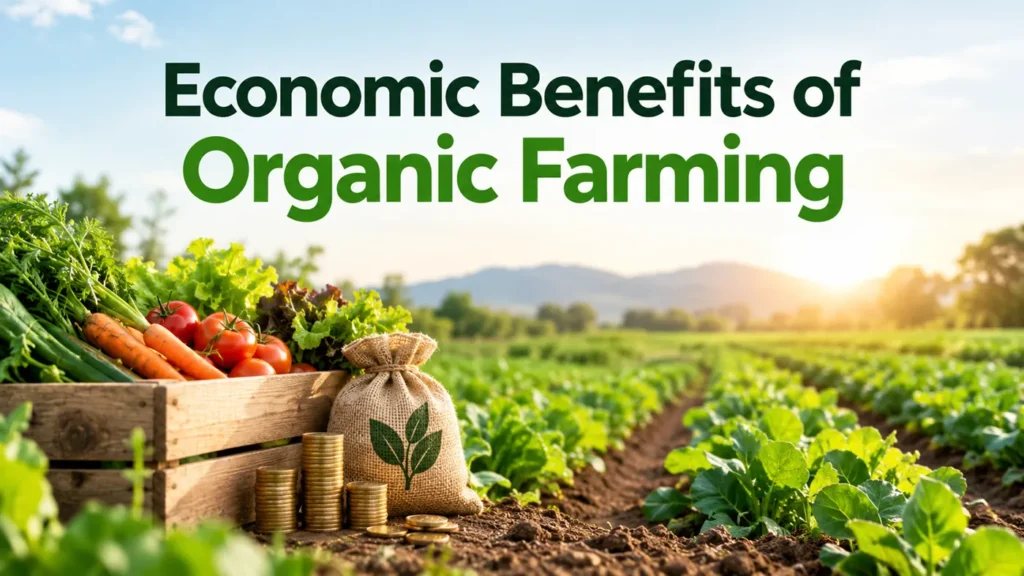
Top Economic Benefits of Organic Farming
Organic farming is an agricultural method that grows crops and raises livestock without synthetic fertilizers, chemical pesticides, genetically modified organisms (GMOs), or artificial growth hormones. Instead, it relies on natural processes like composting, crop rotation, and biological pest control to nourish the soil and protect crops.
What Are the Key Benefits of Organic Farming?
Beyond producing chemical-free food, organic farming delivers long-term ecological, health, and economic advantages:
- Restores Soil Health: Soil organic matter increases natural nutrient cycles, improving fertility for future growing cycles.
- Protects Biodiversity: Avoiding toxic sprays preserves pollinators like bees, beneficial insects, and local wildlife.
- Saves Water & Combats Climate Change: Healthy, organic soil retains more water—reducing irrigation needs—and sequesters more carbon from the atmosphere.
- Delivers Cleaner Food: Consumers enjoy nutrient-rich produce free from synthetic chemical residues.
What Are the Economic Benefits of Organic Farming?
While high initial investment or lower early yields lead some to believe conventional farming is cheaper, organic farming delivers superior long-term economic stability and profitability.
1. Lower Input Costs
Conventional farming requires heavy spending on synthetic nitrogen, chemical sprays, and single-use seeds. Organic farmers save money by making or sourcing inputs locally—such as farm-made compost, bio-fertilizers, and saved natural seeds.
2. Premium Selling Prices & Higher Profits
Organic products command 20% to 50%+ price premiums in domestic and export markets. Combined with lower chemical expenses, these higher retail rates frequently yield higher net profit margins per acre over time.
3. Soil as Real Financial Capital
Rich organic soil functions as a financial asset. High organic matter absorbs rain efficiently, reducing irrigation bills during dry seasons and mitigating crop failure during droughts.
4. Financial Cushion Through Crop Diversity
Conventional farms often rely on massive single-crop monocultures. Organic farms practice polyculture (growing multiple crops together or rotating them). If market prices drop for one commodity, sales from other crops keep the farm solvent.
5. Rural Job Creation & Business Growth
Organic farming requires more skilled labor for crop monitoring, biological pest control, and soil management. These labor costs put money directly into local communities, driving rural economic development.
Conventional vs. Organic Farming: Economic Snapshot
| Feature | Conventional Farming | Organic Farming | Economic Impact |
| Chemical Input Cost | High (Synthetic fertilizers/pesticides) | Negligible (Compost & biological controls) | Significantly cuts recurring operating expenses. |
| Market Value | Standard commodity price | 20%–50%+ Premium price | Boosts gross revenue per harvest. |
| Sensitivity to Fuel Prices | High (Synthetic inputs track oil/gas prices) | Low (Locally sourced natural inputs) | Protects farm margins against energy inflation. |
| Soil Value Over Time | Degrades; needs more chemicals over time | Improves; builds moisture and natural nutrients | Lowers land restoration costs and protects farm valuation. |
What Challenges Does Organic Farming Face?
Transitioning to organic methods comes with real economic hurdles:
- The 3-Year Transition Gap: Land usually takes up to 3 years of chemical-free management before produce can be officially certified organic. Farmers often deal with reduced yields during this phase without benefiting from premium prices yet.
- Certification & Audit Fees: Obtaining official organic certification requires compliance paperwork, annual audits, and admin costs that can burden small farms.
- Higher Labor Expenses: Weeding, composting, and monitoring crops manually require more paid labor hours than spraying synthetic chemicals.
What is the Future of Organic Farming?
The global organic farming market is projected to expand steadily at over 9–11% annually. The main drivers shaping its future include:
- Bio-Tech Innovations: Advanced bio-fertilizers and microbial soil inputs are closing the yield gap, making organic farming more productive without synthetic chemicals.
- Direct-to-Consumer Models: Farmer Producer Organizations (FPOs), farm-to-table delivery platforms, and specialized retail chains allow growers to bypass intermediaries and retain maximum retail value.
- Government Support & Incentives: Worldwide, governments are offering conversion subsidies, tax exemptions, and organic infrastructure support to build resilient food supplies.
FAQs about Economics Benefits of Organic Farming
Analyzing the economic benefits of organic farming shows a clear transition from high-cost, short-term chemical reliance to low-cost, high-margin ecological stability. Although the transition phase and certification costs present short-term hurdles, organic agriculture provides superior long-term financial security through input cost control, premium product pricing, healthier soil, and diversified market income streams.