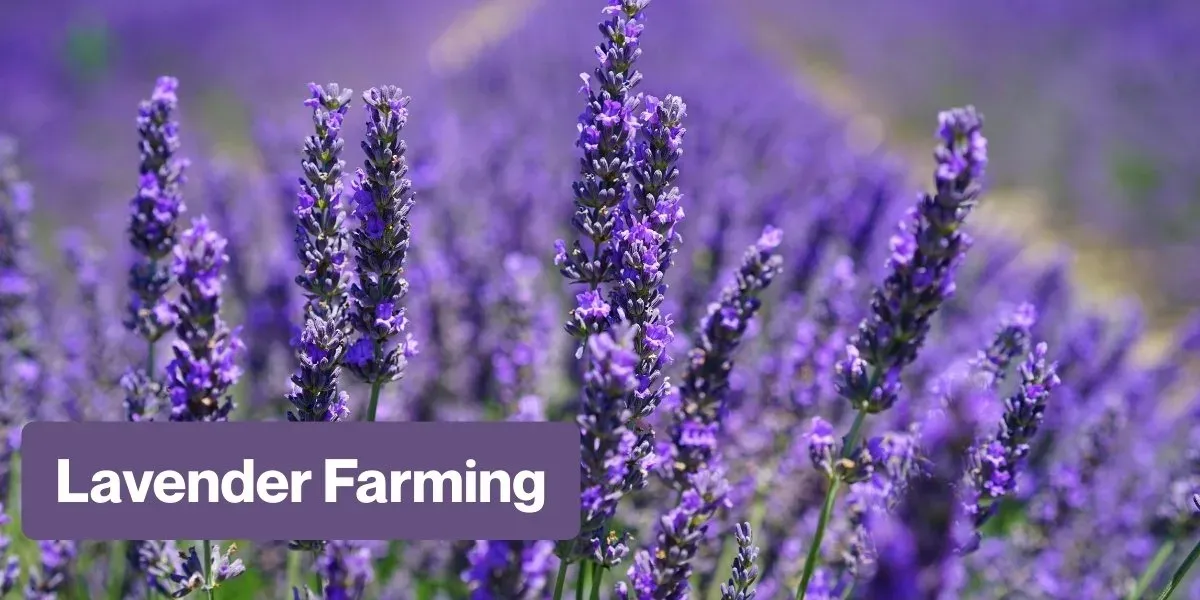
In the gardens and glass bouquets; table decors to kitchen recipes; from fragrances to even skin care, Lavenders have played a significant role in adding that oomph to everything it touched. Lavender farming In India has made to the list because of its many varieties like flowers, essential oils and ornamental values. The hill and semi temperate regions like Jammu Kashmir, Uttarakhand and Himachal Pradesh promotes lavender cultivation as High value, Low Volume cash crop.
What is Lavender Farming?
The cultivation of the plant Lavandula also known as Lavenders for their variety of properties like flowers, essential oils and other stuff. Lavender is a perennial aromatic herb known for its pleasant fragrance, medicinal properties, and wide industrial uses. It is commonly grown in temperate and subtropical climates and is used in cosmetics, perfumery, aromatherapy, herbal medicine, and culinary products.
Key benefits of Lavender farming
Apart from the prettiness of the flower and other values, the plant holds much more benefits of Lavender farming that is recognized world wide.
- High market demand- Ages old remedies for skin care, aromatherapies and overall wellness is beautifully captured under the essence of Lavender. People seek its goodness in oils, soaps, perfumes, cosmetics and candles for a luxury feel, worldwide. Since it’s a high yielding crop holding tremendous value, farmers benefit from it as it generates high income because of the price value that it holds, even if cultivated on a small acre of land. Lavender honey is also highly demanded, since lavender flowers are rich in nectar it encourages bee pollination and thus increasing honey production overall.
- Maintenance and Soil Health- Lavender plants are highly sustainable and require minimum maintenance. Since it doesn’t need replanting every season it reduces long term expenses and once cultivated it can easily flourish for about 10-15 years with proper care. The strong aroma naturally repels pests reducing the amount of pesticides used making it ideal for organic farming. Lavender is a drought tolerant crop; it requires very little irrigation and is highly suitable for rain fed and semi-arid regions. It is an ideal crop for wasteland development as it helps prevents soil erosion and can easily be grown in tough setting like- lands with poor, rocky or marginal soil.
- Economic Growth- It is a highly profitable crop as compared to traditional crops, as discussed earlier; since it is a very low maintenance crop it doesn’t require much of labor for irrigation once it is cultivated. The plant offers export-oriented income opportunities for farmers, since Lavender oil has strong demand in Europe, the US, and the Middle East. It is a stream for multiple income sources like floral arrangements sold in flower shops, dried flowers used for cooking or medicinal purposes, as paste or oil extractions (which is of quite an expensive price in the markets). Other value adding products like- soaps, fragrances in perfumes or attar, Incense sticks, herbal teas or cosmetics also help farmers earn a good living. Increased bee keeping helps in producing lavender honey; another source of valuable good.
What are the challenges of Lavender farming?
As easy as it sounds, there are major factors hampering the concept and causing issues for the lavender farmers to sustain a decent livelihood.
- Climate Sensitivity- Amidst the hilly regions, lavenders flourish and bloom beautifully, however excess heat, humidity and rainfall can cause the roots to deteriorate and rot or reduce the oil quality of the plant. Without proper management it could be a disaster in hot, humid tempered plains.
- Lack of technological knowledge- Farmers may face issues with contamination, poor yield, or disease due to limited training. Also causing them to lose profit without proper knowledge of spacing, harvesting time or the process of oil extraction.
- Maintenance- Even though it requires less labor as compared to traditional crops, but without proper care everything tends to perish at one point or another. Lavenders tend to waterlog if proper soil drainage treatment isn’t done thus leading to damaged roots and reduced plant life. Young lavender plants grow slowly and so growing weeds might steal their nutrients and water during the first year.
- Expenses- Market fluctuations always hamper the profitability for the farmers. A fluctuation in the global supply and cosmetic industry alters the profit margin sometimes. Since a proper yield starts from the second or third year and so farmers have to wait for a long time to start earning a stable profit and expensive pricing on essential oils is enough to damage but the processing fee is unbearable to those with expensive extraction machinery like distillation units, also those without the units also suffer from transportation fee and lower profit margins. The aftermath is one story but the initial investment to start the entire production and cultivation is one hard pll to take. Planting seed, materials, land preparations, Irrigation setup etc costs a hefty toll on the farmer’s pockets.
These are the Solution of lavender farming in India
There’s always hope at the end of the road.
- Climate Sensitivity- Prefer choosing suitable varieties; using high raised beds and providing a good drainage facility helps with the management.
- Knowledge and maintenance- Gaining access to government provided training and schemes helps learn the advancement in the field and understand the ways for excellent lavender farming. Form farmer groups or cooperatives for shared distillation units. For the soil management, better irrigation systems must be installed and timely checked, mulching and early manual weeding can help curb the weed growth.
- Market Fluctuations- Encourage local practices and selling to direct vendors and local market shops or grocery stores and vegetable markets. Extend out to restaurants and cafes to sustain and balance supply and demand chain. Enter contract farming or value-addition businesses.
Also Read This Helpful Blog- Vertical Farming: Growing Crops in the City
FAQs about lavender Farming
1. How long does Lavender take to grow
Lavender starts flowering in 6–8 months, but commercial yields usually begin from the second year.
2. How often is lavender harvested?
Depending on the climatic conditions and variety, usually it is harvested once or twice every year.
3. How much spacing is required between lavender plants?
Generally, 2-3 feet between plants and 3-4 feet between rows to ensure proper circulation, easy harvesting, and reduced fungal diseases.
4. How much essential oil can be produced per year?
Usually 10-15kg of oil per acre, and gradually increases after full yield in second year depending on variety and management.