
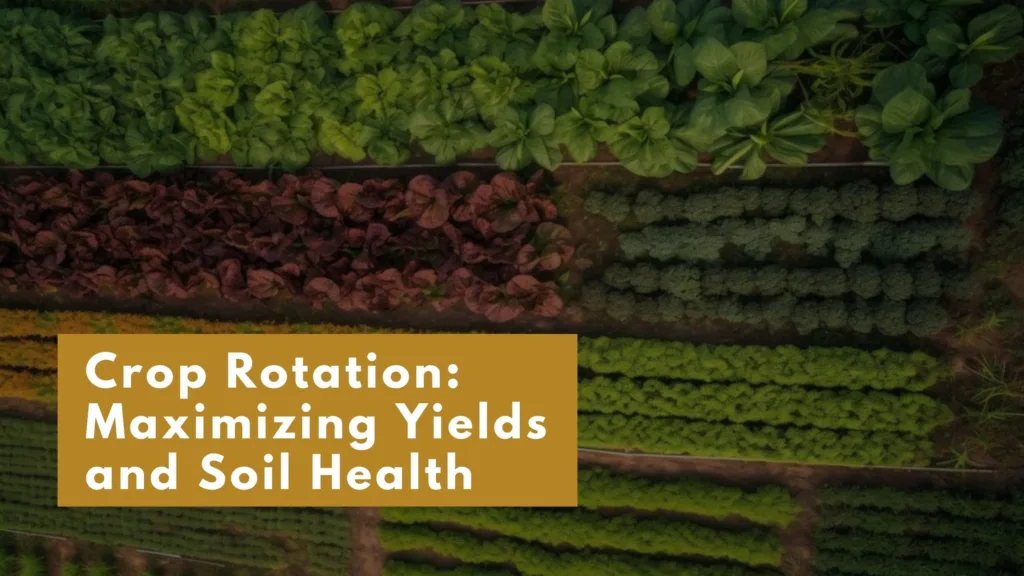
Introduction – Crop Rotation
Agriculture is reaching a crucial turning point in the age-old quest to feed a growing world population. On the one hand, we must increase food production to satisfy the needs of a planet with nearly 7 billion mouths to feed. On the other hand, we must accomplish it sustainably without endangering the environment and our soil quality. Crop rotation is a tried-and-true method that successfully balances these conflicting needs.
Crop rotation is an agricultural technique used for thousands of years. It entails gradually planting various crops on the same plot of land in a particular order. This traditional practice has several advantages, including higher crop yields, reduced insect and disease burdens, better soil health, and a decreased demand for modern fertilizers and pesticides. We will dig into the complexities of crop rotation in this extensive article, looking at its background, guiding principles, benefits, and actual use.
The Historical Perspective-
Although crop rotation has a long history, its fundamentals have changed. Early civilizations like the Romans and Greeks, who understood its advantages in preserving soil fertility, adopted it. The Roman agriculturalist Cato the Elder wrote the earliest known reports of crop rotation in the second century BC. He suggested a three-year rotation cycle that included fallow times, legumes, and grains.
Crop rotation developed into a more complex practice in medieval Europe, with variants on the three-field method. According to this strategy, fields were split into three sections, each planted with a different crop, often wheat or rye, legumes like peas or beans, and fallow land left to rest and regenerate. For centuries, this strategy supported agricultural output throughout Europe.
During the agricultural revolution of the 18th century, the idea of crop rotation underwent additional development. Reputable individuals like Charles Townshend and Jethro Tull encouraged crop rotation, mechanized farming methods, and better soil management practices.
Crop rotation is still a crucial component of sustainable agriculture in the current period as we work to feed a fast-expanding world population while reducing agricultural pollution.
The Principles of Crop Rotation-
crop rotation benefits is based on several key concepts that determine how it is carried out:
Diversity of Crops: Planting several crop varieties in a specific order is the fundamental idea behind crop rotation. The prevention of the accumulation of pests and diseases that specifically target different plant species depends on this variety. Every crop in the rotation should have unique nutritional requirements and development patterns.
Nutritional Cycling: The nutritional needs of various crops differ. Legumes, for example, can fix nitrogen from the atmosphere, enhancing the soil with this crucial nutrient. Some people could deplete a specific vitamin. Crop rotation ensures that the soil’s nutritional balance is preserved, which minimizes the demand for artificial fertilizers.
Controlling pests and diseases: Many pests and diseases are host-specific, meaning they only affect certain types of plants. By disrupting these pests’ life cycles and reducing their number through crop rotation, farmers may use less chemical pesticides.
Weed management: By using crops with various growth tendencies, crop rotation may help manage weeds. Some crops are more effective at suffocating weeds than others, and vice versa. This organic weed control method lessens the need for chemicals.
Soil Health: Crop rotation improves soil health by halting erosion and deterioration. It contributes to preserving organic matter and soil structure, enhancing drainage and water-holding capacity.
Lessened Soil Fatigue: Constantly growing the same can cause the soil to become less productive due to the loss of particular nutrients and the buildup of pollutants. Rotation lessens this problem.
Improved Resilience: Crop rotation makes agricultural systems more resistant to unfavorable weather conditions. Having a wide variety of crops can assist in preventing crop failure if one is susceptible to disease or drought.
Advantages of Crop Rotation-
Crop rotation benefits has a wealth for farmers and the environment, including the following:
Increased Yields: Crop rotation frequently increases yields by preserving soil fertility and lowering insect and disease burdens. This is particularly important in areas with erratic weather.
Reduces pressure from pests and diseases: Rotating disturbs the life cycles of pests and pathogens, lowering the demand for chemical controls and fostering organic pest management.
Improved soil health: Crop rotation improves soil structure, microbial diversity, and nutrient cycling. Inputs like fertilizers and irrigation are less necessary in healthy soils because they are more robust.
Sustainability: To protect the environment and ensure the long-term profitability of agriculture, sustainable agricultural practices, such as crop rotation, are crucial.
Diverse revenue: Because they grow a range of, farmers who adopt crop rotation frequently have diverse revenue streams. This can lessen the financial risks brought on by changes in the market.
Weed control: By competing with weeds, differences in rotation can lower the demand for pesticides.
Lower Input prices: Farmers may use less synthetic fertilizers and insecticides when pest pressure declines and soil health improves, which lowers input prices.
Crop rotation reduces agriculture’s environmental impact by reducing the need for chemical inputs, saving water, and stopping soil erosion.
Practical Implementation of Crop Rotation-
Crop rotation must be carefully planned and implemented by the following rules:
Crop Selection: When selecting your crop rotation, consider the nutritional needs, growth patterns, and pest and disease susceptibilities of each crop. Grains, legumes, oilseeds, and cover are frequently grown in rotation.
Crop Rotation Timetable: Create a crop rotation plan specifying which crops will be sown in each field and in what order. A typical process could have a three- or four-year cycle, but the precise rotation should be customized to the local environment and agricultural objectives.
Cover crops: Include cover crops in your rotation by using them. These plants, like rye or clove, are primarily grown to enhance the condition of the soil. They can control weed growth, stop erosion, and fix nitrogen.
Track Soil Health: Continually check your soil’s pH and nutrient content. You may then modify your rotation and nutrition management strategies as necessary.
Manage agricultural leftovers properly to minimize disease transmission from one season to the next. When required, discard or compost the scraps.
Include cattle: Include cattle in your rotation if possible. They may graze cover and help the manure cycle nutrients.
Record-Keeping: Keep thorough records of the planting dates, kinds, and yields that are part of your crop rotation strategy. You may gradually improve your rotation with the use of this knowledge.
Flexibility: Be ready to modify your rotation schedule in response to alterations in the weather, insect outbreaks, and consumer demand.
Education and Research: Keep up with recent crop rotation studies and best practices. Participate in workshops, seminars, and agricultural extension programs to increase your knowledge.
Challenges and Considerations-
Crop rotation has many advantages; however, there are also difficulties and things to take into account:
Initial Investment: Implementing rotation may need an initial investment in labour, cover crops, and equipment.
Knowledge and Education: To perform crop rotation efficiently, farmers must have a solid grasp of the underlying concepts and the regional climate.
Market Demands: Crop diversification may be necessary for crop rotation, which might make it challenging to market and sell a more excellent range of goods.
Adaptation to Local Conditions: Crop rotation plans must consider the soil types, pest pressures, and local climate. What is appropriate for one area could not be for another.
Monitoring and Record-Keeping: It takes meticulous monitoring and time-consuming record-keeping to keep track of rotations and soil health.
Resistant Pest and Disease Management: rotation techniques can resist some pests and illnesses. To solve these problems, integrated pest control is crucial.
Read More Blog- How Organic Farming Improves Soil Health?
Conclusion
Crop rotation is one sustainable practice that will guarantee food security and protect our priceless soil resources for future generations as the world’s population expands. We can realize the full potential of crop rotation and create a more resilient and sustainable agricultural system via teaching, research, and practical application.

It’s impressive to see how something as simple as crop rotation can have such significant benefits for both yields and soil health.
What a helpful post! It’s inspiring to learn about practices that not only boost yields but also promote soil health. A win-win for farmers and the environment!”